5 Planets Visible in UAE Skies This September: How to Spot Each One
By Thasmiya
UAE residents have plenty of reasons to look up this September.
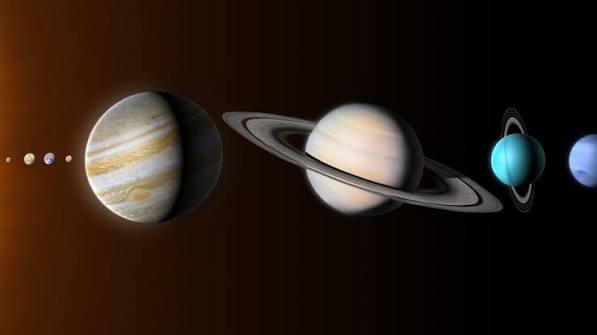
Five planets visible to the naked eye — **Mercury, Venus, Mars, Jupiter and Saturn** — can be spotted in the sky during September 2026, although you will need to look at different times of the night and month to catch them.
Some are extremely easy to identify. Venus becomes exceptionally bright around the middle of September, while Jupiter stands out in the morning sky. Others, particularly Mercury, require better timing and a clear horizon.
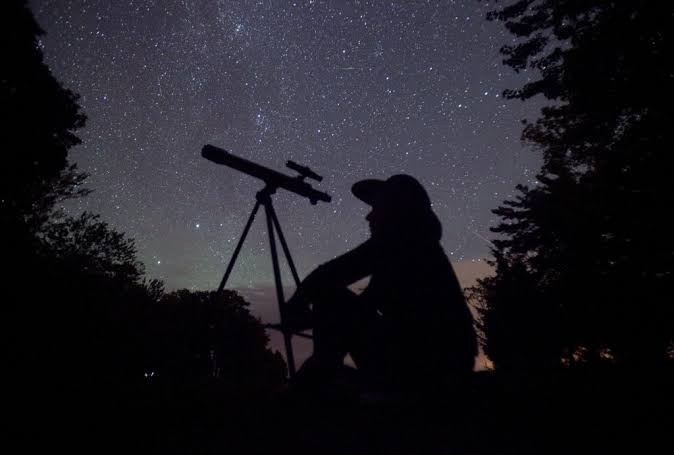
You don’t necessarily need a telescope either. All five are classified among the planets that can be seen without optical equipment when conditions are favourable.
Here is how UAE skywatchers can find each one.
## **Venus: Look West After Sunset**
If you’re new to stargazing, **Venus is the easiest place to start**.
Look towards the **western sky shortly after sunset**.
Venus appears exceptionally bright and is difficult to mistake for an ordinary star. In fact, after the Sun and Moon, Venus is one of the brightest natural objects visible in Earth’s sky.
September 2026 is particularly good for seeing it.
Venus reaches its **greatest illuminated extent — or greatest brilliancy — around September 18**, when EarthSky calculates its brightness at approximately magnitude -4.8.
That makes the middle of the month one of the best opportunities to see Venus glowing over the UAE’s western horizon.
### **Best time to see Venus**
**When:** Shortly after sunset**Direction:** West to southwest**Best period:** Around September 18**Equipment:** None required
Try to find somewhere with an unobstructed western horizon, particularly as Venus moves lower towards the horizon later in its evening appearance.
## **Jupiter: The Bright Planet Before Sunrise**
Early risers have another easy planet to find.
**Jupiter is returning to the morning sky** and appears as a very bright point towards the east before sunrise.
EarthSky describes Jupiter as the brightest object in the predawn sky during this period, making it relatively straightforward to identify even for people unfamiliar with constellations.
The planet becomes increasingly prominent as September progresses.
### **Best time to see Jupiter**
**When:** Before sunrise**Direction:** East**Equipment:** None required
If you are unsure whether you are looking at Jupiter or a bright star, watch the object for a while. Planets generally shine more steadily than stars, which tend to visibly twinkle more because of Earth’s atmosphere.
## **Mars: Find the Reddish Point Before Dawn**
Mars is also visible in the **morning sky** this September.
It can be found higher along the planetary path than Jupiter during early September, with its recognisable reddish-orange colour helping distinguish it from nearby stars.
The Moon provided an especially useful guide earlier in the month.
On September 6, the waning crescent Moon appeared close to Mars, while Jupiter was visible lower towards the eastern horizon. The following morning, the Moon moved between the general positions of Jupiter and Mars.
Even after those conjunctions have passed, Mars remains a morning target during September.
### **Best time to see Mars**
**When:** Predawn hours **Direction:** Generally east/southeast depending on the time **What to look for:** A reddish or orange point of light **Equipment:** None required
Mars is considerably less dazzling than Jupiter or Venus, so getting away from strong city lights will improve the view.
## **Saturn: Watch the Evening and Overnight Sky**
Saturn is another September highlight.
Unlike Venus, which hugs the western evening sky, **Saturn can be found towards the east during the evening hours**.
EarthSky notes that Saturn sits in a relatively sparse section of the September sky without many bright stars nearby, which can actually make identifying it easier.
Later in the month, there is another useful marker.
On **September 26**, the Full Harvest Moon will appear close to Saturn in the sky.
The Moon’s brightness could make Saturn slightly harder to see when they are very close together, but it also gives casual skywatchers an obvious area of the sky to search.
### **Best time to see Saturn**
**When:** Evening and later into the night **Direction:** Look east as it rises **Good date to watch:** Around September 26 **Equipment:** None required to see the planet
With a telescope, however, Saturn becomes much more impressive because its famous ring system can be observed under suitable conditions.
## **Mercury: The Tricky One**
Of the five planets, **Mercury will probably require the most effort**.
Mercury always appears relatively close to the Sun from our perspective, which means it is often visible only briefly around sunrise or sunset.
During late September, Northern Hemisphere observers can look for Mercury **very low towards the western horizon after sunset**, in the same broad part of the sky as Venus.
Venus will be far brighter and therefore much easier to find.
Once you identify Venus, look closer towards the western horizon for Mercury.
### **Best time to see Mercury**
**When:** Shortly after sunset later in September **Direction:** Very low in the west **Equipment:** Naked eye under good conditions; binoculars may help after the Sun has completely set
A completely unobstructed horizon is important.
Buildings, haze and dust can easily hide Mercury because of how low it appears.
**Never use binoculars or a telescope to search near the Sun before it has fully set.**
## **Can You See All Five Planets at the Same Time?**
Not conveniently.
Although Mercury, Venus, Mars, Jupiter and Saturn are all observable during September, they occupy different parts of the sky at different times.
In early September, **Mars, Jupiter and Saturn** feature in the broader morning-sky planetary display.
Venus, meanwhile, is an evening object and becomes particularly spectacular around September 18.
By late September, **Venus and Mercury** can be found towards the western horizon after sunset, while Saturn remains an evening target.
So think of September as a month-long planetary checklist rather than one five-planet event.
## **Best Dates for Stargazing This September**
Several dates are particularly useful for UAE skywatchers.
### **September 11 — New Moon**
The New Moon occurs on **September 11**, creating darker nighttime conditions because bright moonlight will not wash out fainter objects.
Dark skies around a New Moon are particularly useful for general stargazing away from city lights.
### **September 15 — Moon, Venus and Antares**
Shortly after sunset on September 15, the young Moon appears between bright Venus and Antares, the prominent reddish star in the constellation Scorpius.
### **Around September 18 — Venus at Its Brightest**
This is arguably the easiest astronomical sight of the month.
Venus reaches its greatest brilliancy around **September 18**, shining at approximately magnitude -4.8.
Simply look west after sunset.
### **September 23 — September Equinox**
The September equinox occurs on **September 23, 2026**, marking the astronomical beginning of autumn in the Northern Hemisphere.
### **September 26 — Full Moon Near Saturn**
The **Full Harvest Moon** will appear close to Saturn on September 26.
Look towards the eastern sky after sunset to find the pair.
## **Where to Stargaze in the UAE**
You can see the brightest planets from Dubai, Abu Dhabi, Sharjah and other urban areas.
Venus and Jupiter are bright enough that city light pollution usually won’t prevent you from seeing them.
For Mars, Mercury and a richer view of the surrounding stars, darker locations away from dense urban lighting are better.
Desert areas generally offer much darker skies, but always choose a legal and safe viewing location and check weather and road conditions before travelling.
Wherever you are, the most important factors are:
**Clear skies**
**Low haze or dust**
**An unobstructed horizon**
**Minimal surrounding artificial light**
September weather can sometimes bring haze and airborne dust to parts of the UAE, which may reduce visibility close to the horizon.
This matters particularly for Mercury and Venus because they can appear relatively low in the sky.
## **Do You Need a Telescope?**
No.
**Mercury, Venus, Mars, Jupiter and Saturn can all be visible to the naked eye.**
A telescope or binoculars can enhance the experience, however.
Jupiter’s four large Galilean moons can be seen through suitable binoculars or a small telescope, while Saturn’s rings are one of the most recognisable sights through a telescope.
Venus will show phases through a telescope rather than appearing simply as a brilliant point of light.
For beginners, however, the best approach is to start with your eyes.
Find Venus after sunset or Jupiter before sunrise, then gradually work towards the less obvious planets.
## **How to Tell a Planet From a Star**
One simple trick can help beginners.
Stars often appear to **twinkle noticeably**, particularly when they are close to the horizon.
Planets usually shine with a steadier light because their apparent discs are larger than the point-like appearance of distant stars.
Brightness and colour provide other clues.
Venus is extraordinarily bright.
Jupiter is also unmistakably bright.
Mars often has a reddish appearance.
Saturn usually looks like a steady yellowish point.
Mercury is more challenging because it stays close to the horizon and can be affected by twilight.
## **September Is a Good Month to Start Looking Up**
You don’t need specialist astronomy equipment to enjoy the UAE’s September sky.
Start with Venus in the west after sunset.
Wake up early another morning and find Jupiter in the east.
Look for reddish Mars before dawn, track down Saturn during the evening and, if you want the biggest challenge, try to catch Mercury low in the west later in the month.
By the end of September, you could have spotted **five different planets with your own eyes**.
And unlike many astronomical events, you don’t have only a few seconds or minutes to catch them.
You have most of the month to complete the list.
## **FAQ**
### **Which five planets are visible from the UAE in September 2026?**
The five naked-eye planets observable during September are **Mercury, Venus, Mars, Jupiter and Saturn**. Their visibility varies according to the date and time of night.
### **Can you see all five planets at once in the UAE?**
Not conveniently. The planets are best viewed at different times. Venus is prominent after sunset, Jupiter and Mars are morning objects, Saturn is visible in the evening and Mercury becomes a low western evening target later in September.
### **What is the easiest planet to see in September?**
**Venus** is particularly easy to identify. It reaches its greatest brilliancy around September 18 and appears as an exceptionally bright object in the western sky after sunset.
### **When can I see Jupiter from the UAE?**
Jupiter is visible in the **eastern sky before sunrise** during September and becomes increasingly prominent as it returns to the morning sky.
### **When is the best time to see Saturn?**
Saturn is visible in the evening, rising towards the east. On **September 26**, the Full Harvest Moon will appear close to Saturn, providing an easy reference point.
### **Can I see the planets from Dubai without a telescope?**
Yes. All five traditional naked-eye planets can be seen without a telescope when their visibility and weather conditions are favourable. Darker skies will make the fainter planets easier to identify.
### **Where should I look for Mercury?**
Later in September, look **very low towards the western horizon shortly after sunset**. Mercury is considerably more difficult to spot than Venus because it remains close to the Sun in the sky.
### **When is Venus brightest in September 2026?**
Venus reaches its **greatest illuminated extent around September 18, 2026**, when it will shine at approximately magnitude -4.8.
## Related Reads - [Dubai Set to Host FIBA 3x3 World Tour 2026 Event in November](/post/dubai-set-host-fiba-3x3-world-tour-2026) - [UAE Public Holidays 2027: Full List of Expected Dates and Long Weekends](/post/uae-public-holidays-2027-full-list-expected-dates) - [Dubai Tourism Eyes Rebound as ATM 2026 Returns for 33rd Edition](/post/dubai-tourism-eyes-rebound-atm-2026-returns-33rd) - [Dubai Launches ‘Stories of Our Resolve’ National Film Competition to Capture UAE Community Spirit](/post/dubai-launches-stories-of-our-resolve-national-film-competition-to-capture-uae-c) - [More stories like this](/category/events)