Driving in UAE Fog: Weather Alerts, Reduced Speed Limits and Traffic Fines Explained
By Thasmiya
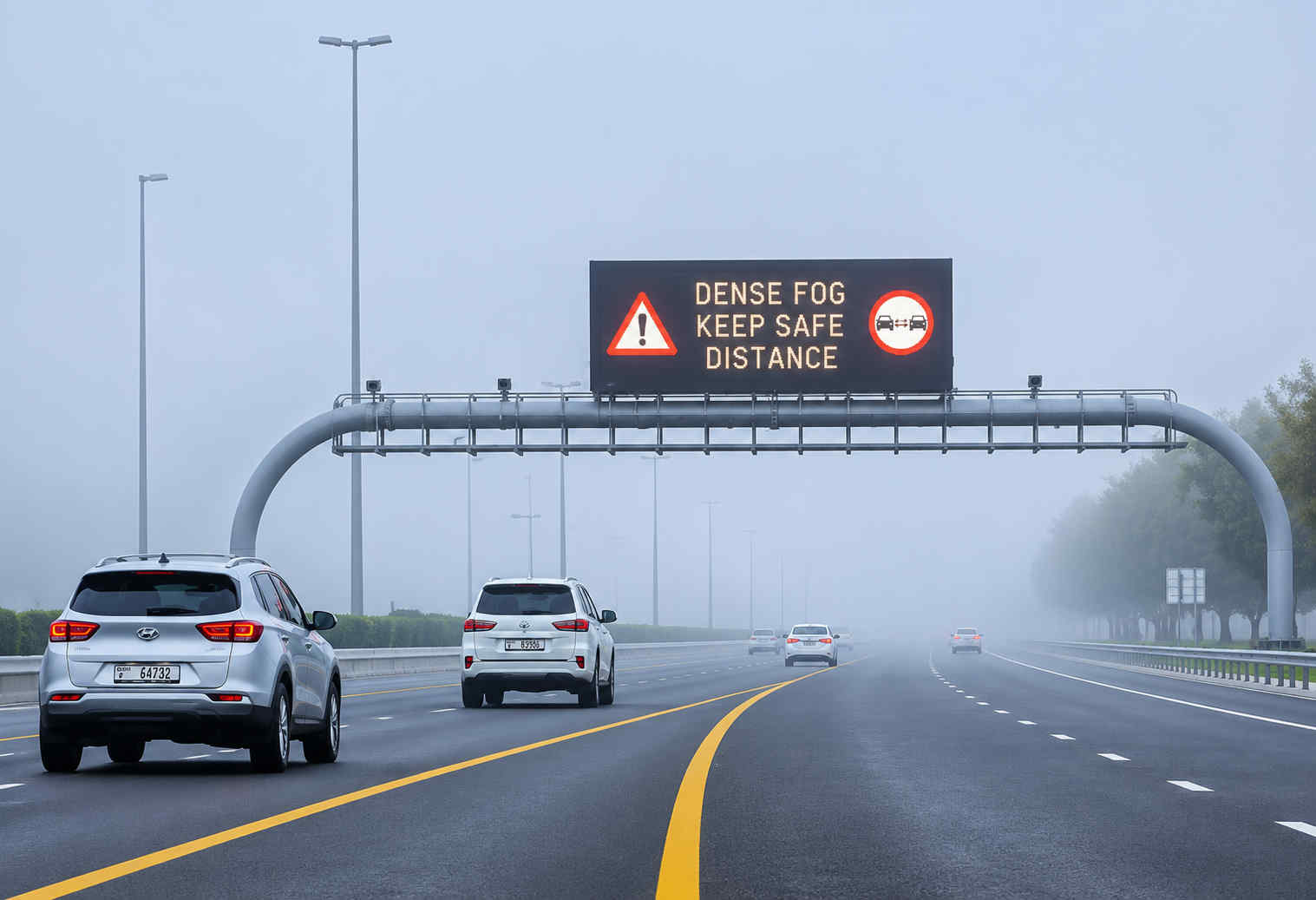
Foggy mornings are becoming an important road safety concern across the UAE as cooler weather brings periods of reduced visibility.
Motorists travelling through Dubai, Abu Dhabi, Sharjah and other emirates may encounter dense fog, particularly during the early morning hours.
Authorities regularly remind drivers to reduce their speed, maintain safe distances and follow official weather warnings.
Under UAE fog driving rules, motorists can also face traffic penalties for failing to comply with instructions issued during foggy conditions.
Here is what drivers need to know about fog alerts, temporary speed limits, [traffic fines and safe driving practices in 2026](https://www.whatmatters.ae/post/uae-traffic-fines-black-points-explained-complete-guide).
UAE Fog Alerts: What Drivers Need to Know
The UAE’s National Centre of Meteorology issues weather alerts when fog or mist is expected to affect visibility.
These warnings help motorists prepare for potentially hazardous road conditions.
Fog can develop during the night and early morning, especially when humidity levels are high and temperatures fall.
Visibility may change significantly between locations, meaning one road can experience clear conditions while another is affected by dense fog.
Drivers should check [official weather updates](https://www.whatmatters.ae/category/things-to-do) before starting their journeys.
Police and transport authorities may also issue additional instructions, including speed reductions and warnings for specific roads.
UAE Fog Driving Speed Limits Explained
Driving at the normal posted speed limit may not be safe when visibility is significantly reduced.
Motorists must adjust their speed to match the prevailing road conditions and comply with any temporary limits introduced by authorities.
In Abu Dhabi, authorities operate a variable speed limit system on designated roads.
During adverse weather, including fog, electronic signs may display a reduced speed limit.
A temporary limit of 80km/h has been used on affected Abu Dhabi roads during foggy conditions.
However, drivers should not assume that 80km/h applies automatically to every road in the emirate.
The speed limit displayed on the electronic signs and communicated through official alerts takes precedence.
UAE Fog Speed Limits by Location
| Location | Fog-Related Speed Guidance | | --- | --- | | Abu Dhabi | Temporary limits, including 80km/h on affected roads, may be activated | | Dubai | Follow posted [speed limits](https://www.whatmatters.ae/post/dubai-speed-limit-change-5-major-roads-november), official alerts and any temporary restrictions | | Sharjah | Reduce speed according to visibility and comply with police instructions | | Other emirates | Follow road signs, weather warnings and local authority instructions |
Important: Temporary fog speed limits are not necessarily nationwide. Drivers must follow the instructions applicable to the road they are using.
UAE Fog Driving Fines: How Much Can Drivers Be Penalised?
Motorists who fail to follow traffic safety instructions during foggy weather can face penalties.
Under the UAE’s federal traffic violations schedule, driving during fog without complying with the competent authority’s instructions carries a penalty of:
AED 500 fine and four black points.
Other traffic violations, including dangerous driving or exceeding applicable speed limits, may result in separate penalties.
The exact consequences depend on the offence committed.
UAE Fog-Related Traffic Violations
| Violation | Penalty | | --- | --- | | Driving during fog without complying with the competent authority’s instructions | AED 500 and 4 black points | | Exceeding a temporary speed limit | Applicable speeding penalty, depending on the recorded violation | | Driving dangerously in poor visibility | Penalty depends on the specific offence | | Stopping unsafely or obstructing traffic | Penalty depends on the applicable traffic violation |
Drivers should not assume that all fog-related offences carry the same fine.
How Abu Dhabi’s Reduced Speed Limit System Works
Abu Dhabi uses electronic road signs to communicate temporary speed limits during adverse weather conditions.
When fog affects visibility, the authorities may activate reduced limits on designated roads.
Drivers are expected to comply with the displayed speed limit until normal restrictions are restored.
The system is intended to reduce the risk of collisions when visibility deteriorates.
Motorists should monitor electronic signs throughout their journey, as restrictions may change between road sections.
Police and transport authorities may also publish alerts identifying affected areas.
Should Drivers Use Hazard Lights in Fog?
Hazard warning lights are not a substitute for proper vehicle lighting during foggy conditions.
Drivers should use the appropriate headlights and fog lights when visibility is reduced.
Using hazard lights while continuing to drive can make it harder for other motorists to identify vehicle movements and intentions.
Hazard lights should generally be reserved for situations where they are needed to warn other road users of a stationary vehicle or another hazard, in accordance with applicable traffic rules.
Drivers should also avoid using high-beam headlights in dense fog.
High beams can reflect off water droplets and make visibility worse.
Low-beam headlights and suitable fog lights are generally more appropriate.
Essential Safety Tips for Driving in UAE Fog
Fog can reduce the distance at which drivers can see vehicles, road markings and obstacles.
Even familiar roads can become difficult to navigate when visibility drops.
Motorists should take additional precautions to protect themselves and other road users.
1. Reduce Your Speed
Drive at a speed that allows you to stop safely within the distance you can see.
Always comply with temporary limits displayed on road signs.
2. Maintain a Safe Following Distance
Increase the distance between your vehicle and the one ahead.
Reduced visibility can make sudden braking more dangerous.
3. Use the Correct Lights
Switch on low-beam headlights and appropriate fog lights.
Avoid high beams when they worsen visibility.
4. Avoid Sudden Lane Changes
Unnecessary lane changes can increase the risk of collisions.
Remain in your lane whenever possible and signal clearly before changing direction.
5. Follow Official Alerts
Check updates from the National Centre of Meteorology, police and relevant transport authorities.
6. Avoid Unnecessary Travel
If visibility becomes extremely poor, consider postponing non-essential journeys until conditions improve.
What to Do If Visibility Becomes Extremely Poor
Drivers may occasionally encounter fog so dense that continuing their journey becomes unsafe.
In these situations, motorists should avoid sudden braking or stopping in an active traffic lane.
If it is safe and lawful to do so, drivers should proceed carefully to an appropriate parking area or safe location away from moving traffic.
Stopping on a motorway shoulder can create additional hazards and should not be treated as a routine solution.
Drivers should follow any instructions issued by police or road authorities.
If an emergency occurs, motorists should contact the appropriate emergency service and provide their location.
Why Fog Is Common in the UAE During Cooler Months
Fog frequently develops in the UAE when atmospheric conditions allow moisture near the ground to condense into tiny water droplets. Fog and mist can become more frequent as the UAE moves into the cooler months. Read our report on [UAE fog and mist warnings](https://www.whatmatters.ae/post/uae-weather-cooler-conditions-ahead-fog-risk-increases) to understand changing weather conditions.
During cooler months, overnight temperature changes and high humidity can contribute to fog formation.
The phenomenon can affect coastal areas, inland roads and low-lying locations.
Fog may be particularly noticeable during the early morning before temperatures rise.
However, the timing and intensity depend on local weather conditions.
The National Centre of Meteorology provides forecasts and warnings to help residents prepare.
How to Check UAE Fog Alerts Before Driving
Motorists can monitor official weather and traffic updates before travelling.
The National Centre of Meteorology publishes forecasts and warnings about reduced visibility.
Police authorities may also issue alerts about affected roads and temporary restrictions.
Drivers in Abu Dhabi should pay particular attention to electronic speed signs and official announcements about variable speed limits.
Dubai motorists can follow updates from Dubai Police and the Roads and Transport Authority.
Checking these sources before an early-morning commute can help drivers plan safer journeys. Motorists can also follow the latest [UAE weather updates for November 2026](https://www.whatmatters.ae/post/uae-weather-november-2026-country-see-heavier-rain) to stay informed about changing conditions, including fog, rainfall and strong winds.
What Should Drivers Keep in Their Cars During Foggy Weather?
Preparing your vehicle before travelling during foggy conditions can help improve road safety. UAE motorists should check that essential vehicle equipment is working properly, particularly during the cooler months when early-morning fog becomes more common.
Here are a few things drivers should check:
- Headlights and Fog Lights: Make sure all headlights, rear lights and fog lights are working properly. - Windscreen Wipers: Check that the wipers can clear moisture and dirt from the windscreen. - Defogging System: Ensure the air conditioning and front and rear window defoggers are functioning correctly. - Tyre Condition: Check tyre pressure and tread condition to maintain proper road grip. - Vehicle Brakes: Make sure the braking system is working properly before starting your journey.
Regular vehicle checks can help motorists prepare for changing weather and road conditions across the UAE.
Frequently Asked Questions
1. What is the fine for driving in fog in the UAE?
Driving during fog without complying with the competent authority’s instructions carries an AED 500 fine and four black points under the federal traffic violations schedule.
2. Is the speed limit reduced to 80km/h during fog in Abu Dhabi?
Abu Dhabi authorities may activate an 80km/h temporary speed limit on affected roads. Drivers must follow the limits displayed on electronic signs and communicated through official alerts.
3. Can drivers use hazard lights while driving in fog?
Hazard lights should not be used as a replacement for headlights or fog lights while driving normally. Drivers should use appropriate vehicle lighting and follow traffic rules.
4. Are UAE fog speed limits the same in every emirate?
No. Temporary speed restrictions and enforcement arrangements can differ between emirates and individual roads.
5. Where can drivers check UAE fog warnings?
The National Centre of Meteorology provides weather alerts, while police and transport authorities publish traffic-related instructions.
Why This Matters
Fog can make driving conditions unpredictable across the UAE, especially during early-morning journeys.
Understanding UAE fog driving rules, temporary speed restrictions and traffic penalties can help motorists make safer decisions.
Drivers should remember that posted speed limits may change during adverse weather and that compliance with official instructions is essential.
The key takeaway: When driving in UAE fog, reduce your speed, maintain a safe distance, use appropriate lights and follow temporary restrictions. Ignoring official fog-related instructions can result in an AED 500 fine and four black points.
Related Reads
- [UAE Traffic Fines and Black Points Explained: A Complete Guide for Drivers in 2026](https://www.whatmatters.ae/post/uae-traffic-fines-black-points-explained-complete-guide) - [UAE Weather: Cooler Conditions Ahead as Fog Risk Increases.](https://www.whatmatters.ae/post/uae-weather-cooler-conditions-ahead-fog-risk-increases) - [UAE Weather November 2026: Will Rainfall Increase Across Dubai and Other Emirates?](https://www.whatmatters.ae/post/uae-weather-november-2026-country-see-heavier-rain) - [UAE Traffic Rules 2027: New 9-Hour Driving Limit to Prevent Fatigue.](https://www.whatmatters.ae/post/uae-traffic-rules-2027-new-9-hour-driving) - [More stories like this](/category/things-to-do)