Etihad Rail Dubai–Abu Dhabi: Will Commuters Swap Two Hours of Traffic for a 57-Minute Train?
By Thasmiya
For thousands of UAE residents who regularly travel between Dubai and Abu Dhabi, the journey can mean long stretches behind the wheel, peak-hour congestion, petrol costs and the exhaustion of doing it all again on the way home.
From **September 30, 2026**, there will be another option.
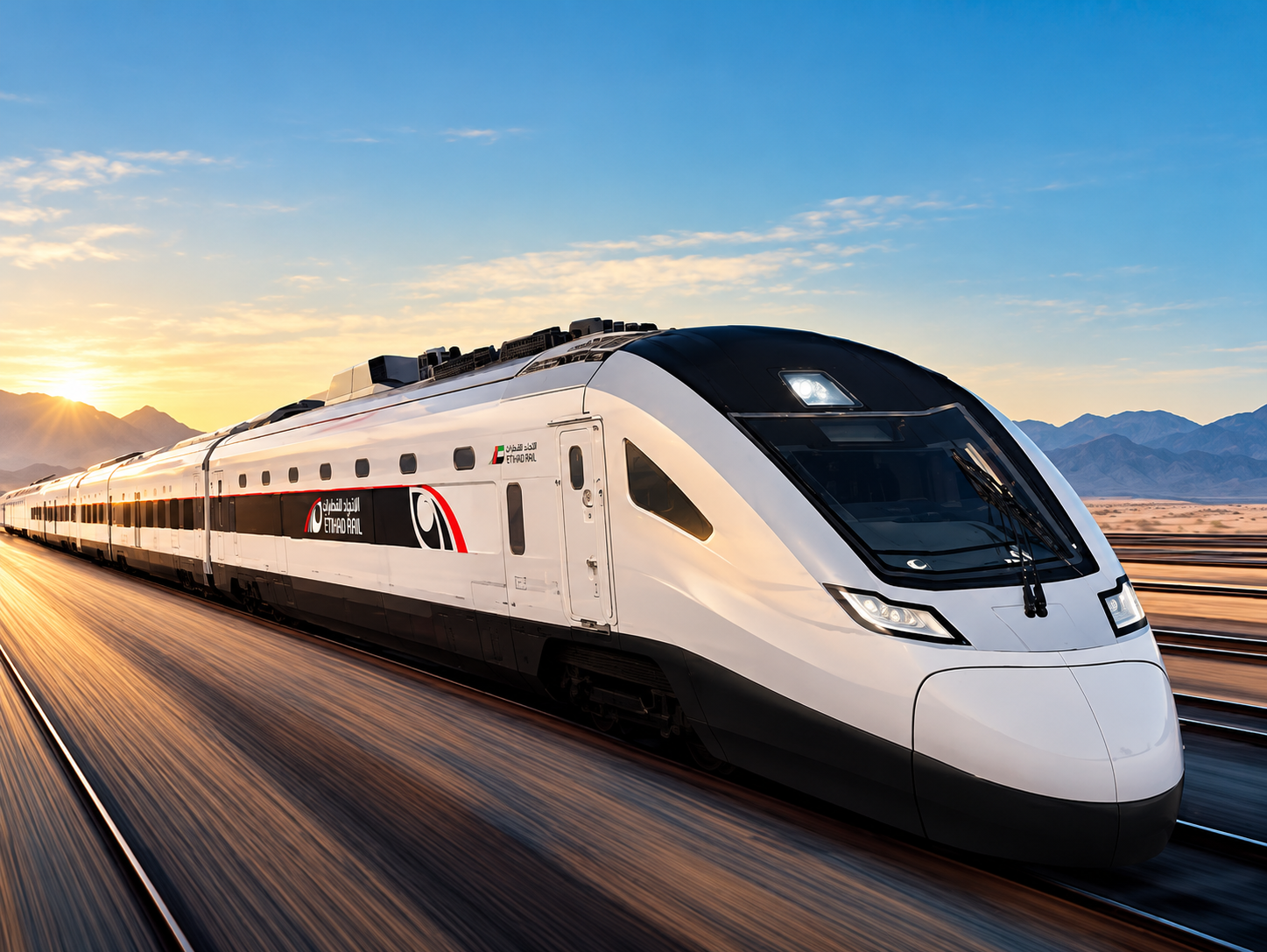
Etihad Rail’s passenger service will connect Abu Dhabi’s **Mohamed bin Zayed City Station** with Dubai, with the journey between the two emirates taking about **57 minutes**. Gulf News reports that peak-hour driving can stretch to as much as two hours each way for some commuters.
The question now is whether the train will be convenient enough to persuade regular commuters to leave their cars behind.
## **Dubai to Abu Dhabi in around 57 minutes**
One of the biggest attractions is travel time.
The new passenger rail connection is expected to cover the Dubai-Abu Dhabi journey in approximately **57 minutes**, offering a more predictable alternative to road travel.
That difference could be particularly significant during weekday peak periods, when accidents, congestion or heavy traffic can make driving times unpredictable.
Instead of concentrating on the road, train passengers will also be able to use the journey for work, reading or simply relaxing.
## **Free Wi-Fi and charging at every seat**
The train is not only about getting from one emirate to another faster.
Etihad Rail confirms that passengers in both Comfort and Premium Class receive **complimentary Wi-Fi**, while universal power sockets and USB charging points are available at every seat. Seating is guaranteed, and trains feature bilingual journey-information screens.
Comfort Class passengers can purchase snacks and non-alcoholic drinks from an onboard trolley.
Premium Class provides wider reclining seats, additional legroom and complimentary drinks and snacks, with further food options available for purchase.
For professionals travelling between the two cities, that could effectively turn commuting time into usable time.
## **Tickets start from AED 39**
According to Gulf News, fares for the Dubai-Abu Dhabi journey will start from **AED 39 for a single trip**.
That could make the train particularly attractive to people who currently rely on taxis or other paid transport between the emirates.
Drivers will need to make a more individual calculation. The cost of a train journey needs to be compared with petrol, Salik where applicable, parking and vehicle running costs—but also with the cost and time required to travel between home, the station and the final destination.
## **What commuters are saying**
Gulf News spoke with professionals who regularly or occasionally travel between Dubai and Abu Dhabi, and their responses highlight both the opportunities and the limitations of the new service.
Some said they would consider using Etihad Rail several times a month or a few times per week rather than completely giving up their cars.
Being able to answer emails, work on a laptop or read instead of driving was a major attraction. Others highlighted avoiding petrol costs, road fatigue and peak-hour congestion.
But one issue repeatedly matters: **the complete door-to-door journey**.
## **The last-mile question could decide everything**
A 57-minute train journey sounds attractive, but commuters still have to reach the station and continue to their workplace after arriving.
For someone living close to Mohamed bin Zayed City Station and working near convenient public transport in Dubai, the calculation could work extremely well.
For someone who lives 20 or 30 minutes from the station and then needs another taxi or lengthy public transport journey after arriving, driving may still feel easier.
Etihad Rail itself advises passengers to allow additional time when connecting with other transport services, as connections to Metro, shuttle buses, taxis and parking are separate from the rail journey.
This means comparing **57 minutes versus two hours** does not tell the entire story.
## **Where is the Abu Dhabi station?**
Abu Dhabi’s main passenger station is in **Mohamed bin Zayed City**.
It is located opposite Dalma Mall, adjacent to Mussafah Bus Station and near Phoenix Hospital.
The station officially entered service as part of Etihad Rail’s introductory passenger operations in June 2026.
Its location could be particularly convenient for residents of MBZ City, Mussafah and surrounding areas, while residents farther into Abu Dhabi city will need to factor in the journey to the station.
## **What about the Dubai station?**
Dubai passenger services officially begin on **September 30, 2026**, as part of the next stage of Etihad Rail’s national rollout.
For commuters, onward connectivity will be one of the most important factors determining whether the train becomes a realistic daily alternative to driving.
Passengers should check Etihad Rail’s latest journey planner when booking, as station connections, schedules and transport arrangements can affect the total commute.
## **Could Etihad Rail change where UAE residents work?**
The impact could go beyond transport.
Professionals who previously rejected jobs in another emirate because of the commute may have more flexibility once rail travel becomes practical.
Recruitment specialists interviewed by Gulf News said improved connectivity could make previously impractical jobs more viable, particularly for employees working hybrid schedules who only need to travel to the office several days per week.
That could also expand the recruitment pool for employers in both cities.
Someone living in Abu Dhabi may become more willing to consider a Dubai position without relocating, while a Dubai resident could potentially do the same for opportunities in Abu Dhabi.
## **Daily commuters may think differently from hybrid workers**
Etihad Rail may not affect every commuter in the same way.
Someone travelling five days per week will probably pay close attention to monthly costs, station access and departure schedules.
A hybrid worker travelling once or twice per week may find the train considerably more attractive because the convenience of avoiding a long drive could outweigh the last-mile journey.
The same applies to professionals travelling between the emirates for meetings, events or client visits.
For these passengers, the ability to work during the journey could be almost as important as the time saved.
## **Car vs Etihad Rail: what should commuters compare?**
Before deciding, commuters should consider the entire journey rather than the train time alone.
For driving, calculate typical peak-hour travel time, petrol, tolls, parking and the physical effort of driving.
For Etihad Rail, consider the ticket price, travel time to the departure station, waiting time, the 57-minute rail journey and transport from the arrival station to the final destination.
There is also a less obvious factor: what you can do with those minutes.
An hour spent driving requires full attention. An hour on a train with Wi-Fi, charging and guaranteed seating can potentially be used for emails, reading, entertainment or rest.
## **Etihad Rail is expanding across the UAE**
The Dubai-Abu Dhabi connection forms part of a much larger passenger network.
Passenger operations began between Abu Dhabi and Fujairah on June 30, with six daily trips during the introductory phase. Dubai and Al Dhaid services are scheduled to begin on September 30, with additional stations following as the network expands.
The long-term goal is to create a connected national passenger railway linking cities and communities across the Emirates.
## **Why this matters**
For years, the Dubai-Abu Dhabi commute has forced many professionals to make a choice between living closer to work or accepting hours of road travel.
Etihad Rail introduces a third possibility.
A roughly **57-minute train journey, fares starting from AED 39, complimentary Wi-Fi, power at every seat and guaranteed seating** could make travelling between the UAE’s two largest cities substantially more manageable for some commuters.
But whether residents actually leave their cars at home will depend on more than the train itself.
Station accessibility, last-mile connections, work location, schedules and total daily cost will determine whether Etihad Rail becomes an occasional convenience, a hybrid worker’s favourite commute or a genuine everyday alternative to driving.
With Dubai services beginning on September 30, commuters will soon be able to make that calculation for themselves.
## Related Reads - [UAE Emerges as Middle East’s Leading Private Capital Market as Investor Confidence Rises](/post/uae-emerges-middle-easts-leading-private-capital-market) - [UAE Then vs Now: What Long-Term Residents Miss Most About the Old Days](/post/uae-then-vs-now-long-term-residents-miss) - [UAE Salary Trends 2026: What Expats Are Saying About Pay, Raises and the Cost of Living](/post/uae-salary-trends-2026-expats-saying-about-pay) - [New UPI Charges From October 15: What UAE NRIs Need to Know Before Paying](/post/new-upi-charges-october-15-uae-nris-need) - [More stories like this](/category/news)