Gold Buyers Turn to Lighter Jewellery as High Prices Reshape Demand in Q2
By Thasmiya
Gold Buyers Turn to Lighter Jewellery as High Prices Reshape Demand in Q2
Gold buyers increasingly shifted towards lighter jewellery during the second quarter as elevated prices continued to affect affordability across major markets, including the UAE.
According to the World Gold Council’s latest Gold Demand Trends report, global jewellery demand fell to **278 tonnes in Q2**, its lowest quarterly volume since the pandemic. Despite the drop in physical volume, consumer spending on gold jewellery rose **14% year-on-year to $40 billion**, showing that buyers were still willing to spend but were purchasing less gold by weight.
## **Why shoppers are choosing lighter jewellery**
High gold prices have pushed many consumers to reconsider the size and weight of their purchases.
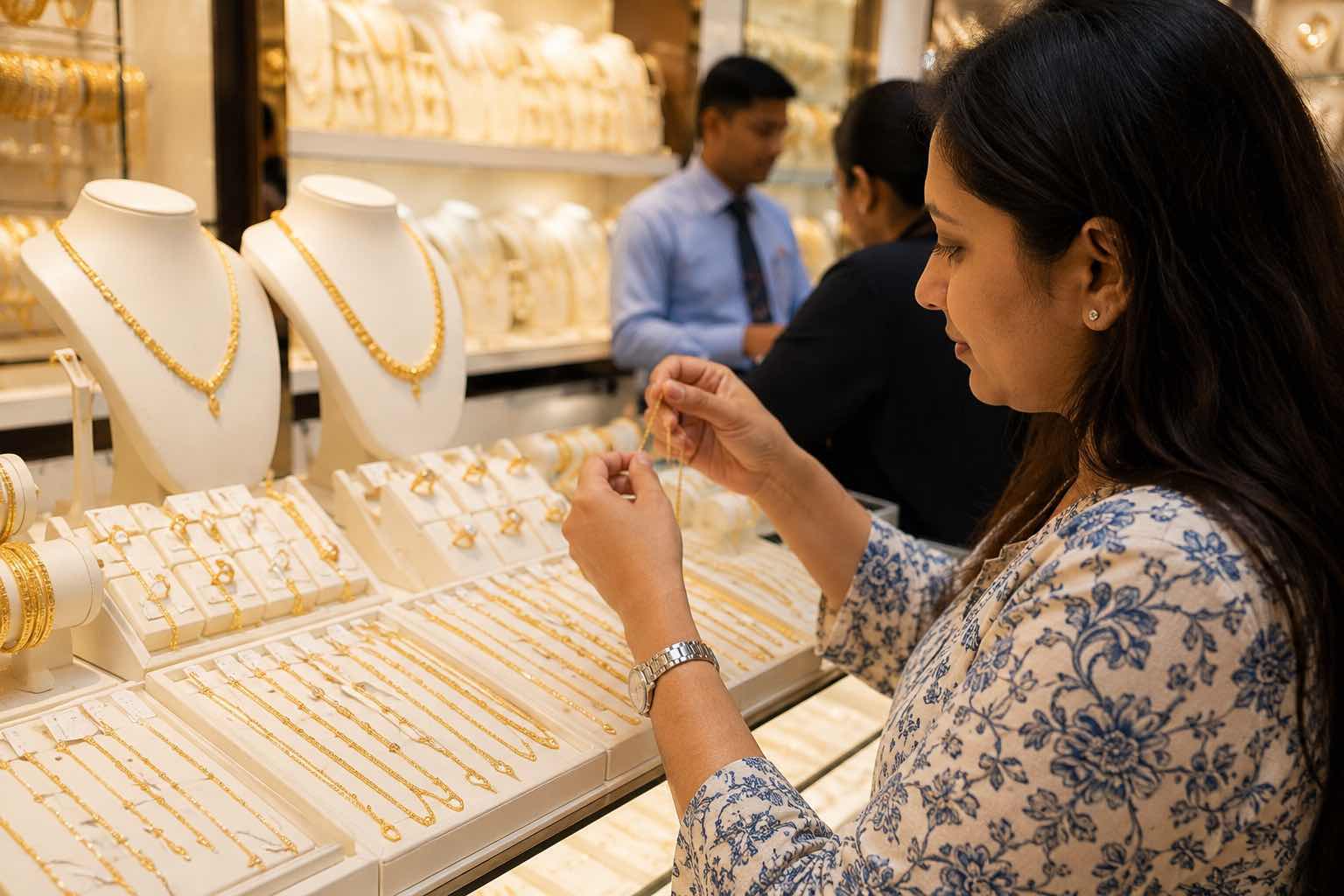
Instead of abandoning jewellery altogether, buyers are increasingly selecting:
- Lightweight chains and necklaces - Thin bangles and bracelets - Smaller earrings and rings - Minimal everyday designs - Pieces combining less gold with stones or alternative materials
This allows customers to stay within a fixed budget while still buying gold for weddings, festivals, gifts or personal use.
The trend reflects a broader shift towards value-based purchasing, where shoppers focus on the total cost rather than simply buying traditional heavier designs.
## **Global jewellery demand fell in Q2**
Worldwide gold jewellery demand dropped to **278 tonnes** during the second quarter as high prices and wider inflationary pressures constrained purchasing power.
The figure was the lowest quarterly volume recorded since the pandemic period. However, the total value of jewellery purchases increased because customers were paying considerably more for each gram of gold.
This means the jewellery market remained active, but buying patterns changed.
Consumers generally purchased fewer grams, lighter products or postponed larger purchases while waiting for more favourable prices.
## **UAE records another quarterly decline**
The UAE gold jewellery market recorded its **14th consecutive quarterly year-on-year decline** during Q2.
The country was also among the few markets where jewellery demand fell year-on-year when measured in US dollar value. High prices remained the primary affordability challenge, while regional geopolitical disruption also affected tourist-driven jewellery sales.
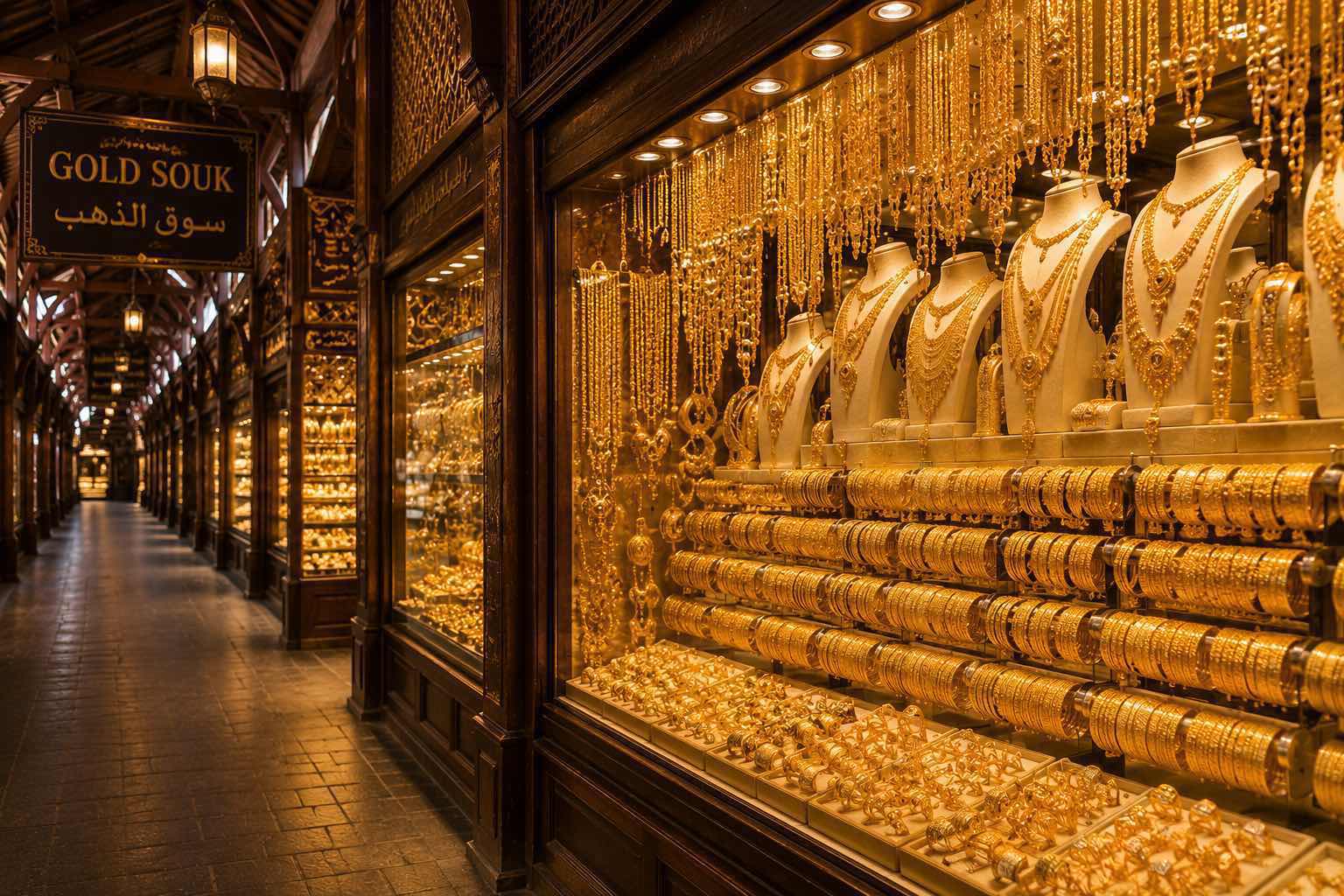
Tourists represent an important part of jewellery demand in the UAE, particularly in Dubai, where gold shopping remains popular among visitors from India, Europe, Asia and the wider Middle East.
A reduction in visitor activity during periods of regional uncertainty can therefore have a direct impact on retail sales.
## **Lower prices provided some support**
Although gold remained expensive by historical standards, prices eased from their earlier peaks during part of the quarter.
This encouraged some delayed buyers to return to the market, particularly those purchasing jewellery for weddings, festivals or other planned occasions.
Retail demand also received support from Indian expatriates, while India’s higher gold import duty increased the relative price advantage of purchasing gold in the UAE.
## **Spending increased even as buyers purchased less gold**
One of the clearest trends in Q2 was the gap between jewellery volume and consumer spending.
Global jewellery demand declined by weight, yet spending increased to **$40 billion**.
This suggests that many customers did not completely stop purchasing jewellery. Instead, they adjusted their buying behaviour by:
- Choosing lighter pieces - Reducing the number of items purchased - Setting stricter budgets - Prioritising important occasions - Trading in existing jewellery - Selecting designs with lower gold content
High prices therefore reduced the amount of gold purchased without eliminating demand entirely.
## **Bars and coins remained more attractive to investors**
While jewellery demand weakened, investment demand remained comparatively resilient.
In the UAE, demand for gold bars and coins increased **30% year-on-year during Q2**, supported by safe-haven buying, price corrections and the country’s relative price advantage compared with India.
Some buyers now view bars and coins as a more efficient way to gain exposure to gold because they generally carry lower making charges than jewellery.
This has contributed to a growing divide between people purchasing gold for investment and those buying it for personal use.
## **Total gold demand remained stable**
Global gold demand, including over-the-counter investment, was broadly unchanged from a year earlier at **1,269 tonnes in Q2**.
Demand during the first half of the year reached **2,522 tonnes**, representing an increase of 2% year-on-year.
However, the value of total demand climbed to a record **$380 billion**, driven by elevated gold prices.
The figures show that the gold market remained financially strong even though jewellery consumption by weight declined.
## **What lighter jewellery means for retailers**
Jewellers are responding to the affordability challenge by expanding collections that use less gold without appearing overly delicate.
Popular strategies may include:
- Hollow jewellery designs - Slimmer chains and bangles - Smaller bridal sets - Modular pieces - Jewellery combining gold with gemstones - Lower-weight versions of traditional designs - More 18-karat options alongside 21-karat and 22-karat products
These designs help retailers maintain sales while offering customers more accessible price points.
However, buyers should remember that hollow or highly delicate jewellery may require more careful handling than heavier pieces.
## **Is lightweight jewellery cheaper?**
Lightweight jewellery usually has a lower total purchase price because it contains fewer grams of gold.
However, the final amount also depends on:
- Gold purity - Daily gold rate - Making charges - Design complexity - Gemstones or diamonds - Retailer margins - Taxes or other applicable fees
A lighter piece may sometimes carry a higher making charge per gram because intricate designs require more specialised craftsmanship.
Buyers should therefore compare the final invoice rather than judging value only by weight.
## **Should UAE buyers wait for prices to fall?**
There is no guaranteed way to predict short-term gold prices.
Buyers purchasing jewellery for a fixed event may prefer to set a budget and select a suitable weight instead of waiting indefinitely for a major price decline.
Those buying primarily for investment should compare jewellery with bars, coins or regulated gold investment products, as jewellery includes making charges that may not be recovered during resale.
Gold demand is expected to remain sensitive to price changes through the second half of the year, while wedding, festive and investment buying may continue to support the market.
## **Tips for buying lightweight gold jewellery**
Before making a purchase:
- Check the live gold rate - Confirm the item’s purity and weight - Ask for a breakdown of making charges - Compare solid and hollow designs - Review exchange and buyback terms - Request a detailed invoice - Check whether stones are included in the billed weight - Choose designs suitable for regular wear
Buyers should also inspect clasps, links and joints, particularly when purchasing very thin chains or bracelets.
## **Why this matters**
High gold prices are not only reducing demand; they are changing the type of jewellery consumers purchase.
Rather than leaving the market completely, many buyers are adapting by choosing lighter, smaller and more budget-conscious designs. At the same time, investors are showing stronger interest in bars and coins, which offer exposure to gold with fewer jewellery-related costs.
For UAE retailers, the trend means lightweight collections and transparent pricing are becoming increasingly important. For shoppers, it highlights the need to compare weight, purity, making charges and resale value before buying.
## **FAQs**
### **Why are gold buyers choosing lighter jewellery?**
High gold prices have made heavier pieces less affordable, encouraging shoppers to select lower-weight designs that fit within their budgets.
### **How much did global jewellery demand fall in Q2?**
Global gold jewellery demand fell to 278 tonnes, the lowest quarterly volume since the pandemic.
### **Did consumers spend less on jewellery?**
No. Although demand fell by weight, global spending increased 14% year-on-year to $40 billion because gold prices remained high.
### **What happened to jewellery demand in the UAE?**
The UAE recorded its 14th consecutive quarterly year-on-year decline in jewellery demand during Q2.
### **Are UAE buyers purchasing more bars and coins?**
Yes. UAE bar and coin demand increased 30% year-on-year during the second quarter.
### **Is lightweight jewellery a good investment?**
It can retain gold value, but making charges and design costs may reduce resale returns. Bars and coins may be more suitable for buyers focused mainly on investment.
### **What should buyers check before purchasing?**
Buyers should confirm purity, weight, making charges, gemstone costs, exchange policies and buyback terms.
## **Source Credits**
Information source and resource owners: World Gold Council, Gold Demand Trends Q2 2026 and Khaleej Times.
## **Image Credits**
Image sources are combined from AI-generated visuals and other platforms. If any owner wants to be mentioned or any content needs to be changed, please email us at [concerns@whatmatters.ae](mailto:concerns@whatmatters.ae).