How Sharjah’s House of Wisdom Is Helping Children Turn Curiosity Into a Lifelong Love of Learning
By Thasmiya
A child asking “why?” may seem like a simple moment, but at Sharjah’s House of Wisdom, that curiosity is being treated as the beginning of something much bigger.
The cultural and learning hub is encouraging children to move beyond simply reading books and instead learn how to question, explore, research, discuss and eventually turn their ideas into something they can create.
From dedicated children’s spaces and hundreds of thousands of books to digital resources, workshops and a high-tech fabrication lab, House of Wisdom is developing an environment where reading is only the first step in a lifelong learning journey.
## **It starts with a simple question**
House of Wisdom’s approach is built around the idea that literacy continues to evolve.
Reading remains fundamental, but modern literacy also involves knowing how to find information, understand it, evaluate different sources and use what has been learned.
For younger visitors, this process can start naturally with a story. A child discovers a character, place or idea they have never encountered before, becomes curious and starts asking questions.
House of Wisdom then provides different resources through which that curiosity can develop into independent exploration.
Marwa Al Aqroubi, Executive Director of House of Wisdom, explained that literacy develops as people ask questions, explore ideas and encounter different perspectives. The institution’s role, she said, is to provide experiences and resources that encourage curiosity and give people confidence to continue learning throughout their lives.
## **More than 305,000 books and resources to explore**
Children and families have access to a substantial collection.
House of Wisdom currently says its resources span **more than 305,000 books**, including approximately **105,000 printed books**, alongside millions of renewable digital titles.
The collection extends beyond conventional books to reading and comprehension resources, periodicals and digital research material.
As children grow older, those resources can support increasingly complex interests, from casual reading to school projects and eventually academic research.
## **The Little Reader makes learning child-friendly**
House of Wisdom also has a dedicated environment designed specifically around younger visitors.
The **Little Reader** combines books with play and hands-on learning, giving children an environment where reading does not have to feel separate from entertainment.
Previous House of Wisdom programming in the space has incorporated books, board games, STEM workshops and practical activities designed to encourage children to explore subjects independently.
That combination is important to House of Wisdom’s wider philosophy: learning can happen through interaction and experimentation, rather than only through formal lessons.
## **Books aren’t the only way children can learn**
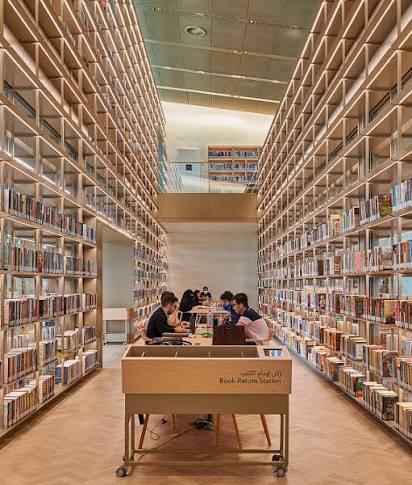
One of the biggest differences between House of Wisdom and a conventional library is the variety of formats available.
Readers can use traditional printed books, but they can also access audiobooks through the Libby app and newspapers and magazines from around the world through PressReader.
Students, researchers and general readers can additionally explore journals and academic research across different subjects, languages and perspectives.
It allows young people to gradually discover which methods of learning work best for them.
## **Workshops turn learning into an experience**
House of Wisdom regularly runs workshops, reading activities, language programmes and cultural events.
Its current programme includes activities specifically categorised for **Little Readers** and youth, alongside programmes for adults. Workshops can move beyond books into creative subjects, arts, technology and practical skills.
Previous children’s programmes have combined storytelling with experiments, arts and crafts, STEM activities, games and technology.
The aim is to make children participants in the learning process rather than passive recipients of information.
## **Children can eventually turn ideas into real objects**
Perhaps one of the clearest examples of House of Wisdom’s approach is the **Al Jazri FabLab**.
The makerspace is equipped with technology including **3D printers, laser cutters, robotics kits and AI workstations**.
Students and young inventors can take something they have learned or imagined, develop a design and then experiment with actually creating it.
The learning journey can therefore progress from:
**Read → Question → Research → Experiment → Create.**
Instead of knowledge ending when a book is closed, it can become the starting point for building something new.
## **Technology is being used as a learning tool**
House of Wisdom is also embracing technology rather than treating digital media as the opposite of reading.
Its programmes have increasingly incorporated emerging technology alongside traditional learning.
In its 2025 summer camps, for example, House of Wisdom combined technology, arts, storytelling, creative thinking and hands-on experimentation. Organisers said the programme was designed to help children and young people move from being passive consumers of technology towards becoming active creators.
Parents participating in those programmes reported improvements in children’s confidence, curiosity and digital literacy.
## **Learning also happens through conversation**
Not everything at House of Wisdom happens individually.
Book clubs, workshops, courses and discussions allow visitors to exchange opinions and hear different perspectives.
The House of Wisdom Book Club, for example, gives participants an opportunity to discuss ideas and engage more deeply with what they have read.
This reflects the institution’s broader goal of being a cultural and social learning hub rather than simply somewhere people borrow books.
## **A library designed for a new generation**
House of Wisdom itself was created around this wider definition of learning.
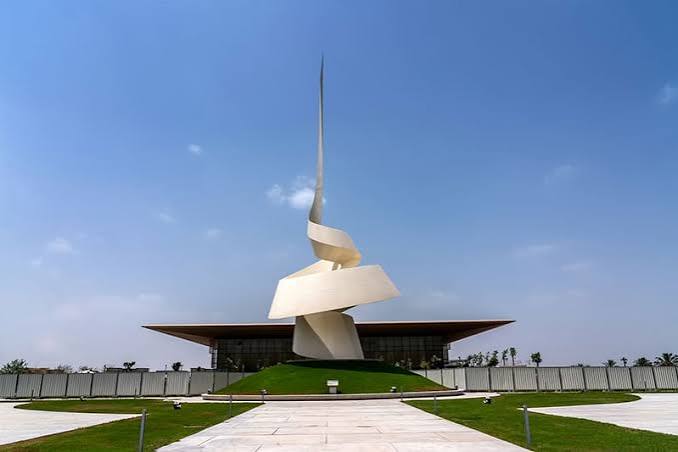
The 12,000-square-metre cultural centre was commissioned following Sharjah’s designation as **UNESCO World Book Capital 2019** and designed by Foster + Partners.
Its mission is centred on creating a new model of learning where knowledge can be gained through everyday interactions and created through engagement rather than simply consumed.
The building combines library collections with cultural programmes, creative spaces, gardens, technology and areas for collaboration.
## **Can families visit House of Wisdom?**
Yes. House of Wisdom is located in **Al Juraina 1, Sharjah**, near University City.
According to its current official information, opening hours are:
**Sunday to Thursday:** 8am to 11pm**Friday and Saturday:** 8am to midnight
Individual workshops and programmes can have separate fees, age requirements and booking rules. Families should therefore check the current events calendar before visiting.
See current House of Wisdom programmes and workshops
## **Why this matters**
The bigger story behind House of Wisdom is not simply that Sharjah has built a modern library.
It is about changing children’s relationship with learning.
A child might arrive because they want to hear a story. That story can lead to a question. The question can lead to another book, an audiobook, research or a workshop. An idea discovered there might eventually reach the Al Jazri FabLab, where it becomes something the child can design and create.
The tools may change as children grow, but the habit House of Wisdom is trying to develop remains the same: **read, understand, question, explore and keep discovering.**