Is Fog Back in the UAE? Why September Humidity Is Bringing Foggy Mornings to Dubai and Abu Dhabi
By Thasmiya
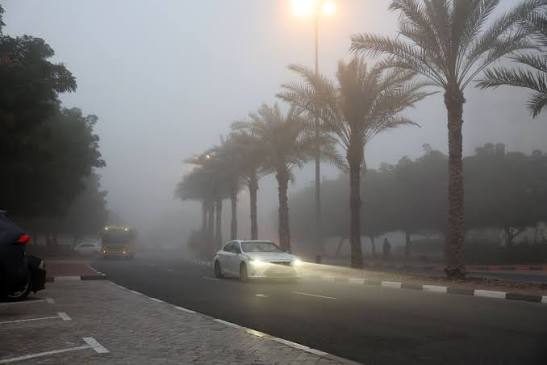
September has arrived in the UAE, and along with the continued summer heat, residents are beginning to see another familiar weather phenomenon return: **early-morning fog and mist**.
The UAE’s National Centre of Meteorology (NCM) issued a fog alert for the morning of **September 2, 2026**, warning that visibility could drop across some coastal and internal areas.
With overnight humidity approaching **90% in some locations**, conditions are becoming increasingly favourable for fog formation across Dubai, Abu Dhabi and surrounding areas.
## **Is fog season starting again in the UAE?**
Yes, September marks the beginning of a period when fog becomes increasingly common across parts of the country.
While temperatures remain high, the transition towards the cooler months brings changes in overnight temperature and humidity.
According to current weather reporting based on NCM data, fog in the UAE generally becomes more frequent from September onwards, although the exact location and intensity can vary significantly from one morning to another.
## **UAE fog alert issued for September 2**
For Wednesday, September 2, NCM issued a fog alert covering the period from **1am until 8.30am**.
Reduced horizontal visibility was possible over some coastal and internal areas.
The wider forecast calls for fair to partly cloudy conditions, with the possibility of convective clouds developing over eastern areas during the afternoon.
Despite the changing season, inland daytime temperatures can still reach the **low to mid-40s Celsius**.
## **Why does September bring so much fog?**
The answer is a combination of **humidity, overnight cooling, calm winds and moisture from surrounding seas**.
During the evening, moisture-rich air can move inland. After sunset, desert surfaces lose heat relatively quickly, cooling the air immediately above them.
When that air cools sufficiently to reach its **dew point**, it becomes saturated. Water vapour then condenses into countless tiny droplets suspended close to the ground.
That creates fog.
Radiation fog accounts for the vast majority of fog events recorded in the UAE, according to research cited in current UAE weather reporting.
## **Why can it be 40°C during the day and foggy the next morning?**
Fog does not necessarily require cold daytime weather.
What matters is what happens to the air **overnight**.
The UAE can experience extremely hot afternoons while simultaneously having large amounts of moisture in the lower atmosphere.
After sunset, the ground begins cooling. If the air close to the surface cools until its temperature approaches the dew point, that moisture can condense.
This is why a hot September afternoon can be followed by a surprisingly foggy morning.
## **Why is humidity so high in September?**
Warm surrounding waters continue releasing substantial amounts of moisture into the atmosphere after the peak of summer.
Coastal cities such as Dubai and Abu Dhabi are particularly influenced by nearby marine moisture, while seasonal winds can transport additional humid air into the country.
Current forecasts indicate overnight relative humidity can reach around **90% across some coastal and inland areas**.
September is consequently one of the UAE’s notoriously humid months, even as temperatures gradually begin their seasonal decline.
## **What does 90% humidity actually mean?**
A reading of 90% relative humidity does not mean the air is 90% water.
Relative humidity measures how much water vapour the air currently contains compared with the maximum amount it could hold at its current temperature.
As the air cools overnight, its capacity to hold water vapour decreases.
When the temperature reaches the dew point, condensation begins—and if conditions near the ground are right, fog develops.
## **Where is fog most likely in the UAE?**
Fog does not necessarily cover entire cities at once.
Certain inland and desert areas are particularly prone to fog because the ground can cool rapidly overnight.
Research highlighted in current UAE weather reporting identifies **Sweihan and areas southwest of Abu Dhabi** as important fog-formation zones.
Fog can then spread towards major highways and surrounding communities.
Areas and corridors that have historically experienced fog include Al Dhafra, Liwa, Madinat Zayed, Ghayathi, routes between Abu Dhabi and Al Ain, roads towards Dubai, Ghantoot, Jebel Ali, Al Maktoum International Airport, Al Minhad and Saih Al Salam.
Dubai, Abu Dhabi and Sharjah can also experience localised fog and mist depending on overnight conditions.
## **What time does UAE fog usually form?**
Fog is primarily an overnight and early-morning phenomenon.
Conditions can develop during the early hours before sunrise and persist into the morning commute.
Sunlight gradually warms the ground and surrounding air after sunrise, allowing the suspended water droplets to evaporate.
This is why fog frequently begins clearing after around **8am to 9am**, although dense patches can remain longer in some inland areas.
## **Does September fog mean summer is over?**
Not quite.
Astronomical summer does not end until later in September, and daytime temperatures can remain very high throughout the month.
However, increasing fog can be viewed as one of the signs that the UAE is beginning its gradual transition away from peak summer conditions.
The appearance of the **Suhail star around August 24** is also traditionally associated in the Arabian Peninsula with the gradual retreat of the most intense summer heat.
The change is gradual rather than immediate: hot afternoons continue while nights slowly change and humidity becomes increasingly noticeable.
## **Will there be more fog throughout September?**
Fog is likely to remain a recurring possibility whenever the necessary combination of humidity, cooling and light winds develops.
That does not mean every morning will be foggy.
Fog formation can be extremely localised, meaning one highway may have clear visibility while another route several kilometres away experiences dense fog.
Current reporting based on NCM patterns suggests the UAE could continue seeing hot days followed by increasingly humid nights and periodic fog or mist through September.
## **Drivers should be particularly careful**
Fog can dramatically reduce visibility on highways, particularly before sunrise.
Motorists should reduce speed, increase the distance from the vehicle ahead and avoid sudden lane changes.
Use **low-beam headlights** rather than high beams, as high beams can reflect off fog droplets and make visibility worse.
Hazard lights should be reserved for emergencies rather than used continuously while driving.
Drivers should also follow temporary speed limits displayed on electronic road signs, particularly in Abu Dhabi where speed limits can be reduced during poor weather conditions.
## **Check conditions before an early commute**
Anyone travelling between Dubai, Abu Dhabi, Al Ain or the Western Region early in the morning should check the latest NCM alerts before leaving.
Fog can develop quickly and may significantly increase journey times.
Allowing extra time is particularly important for airport journeys, school runs and long inter-emirate commutes.
Check the latest UAE weather and warnings from NCM
## **Why this matters**
September may signal the beginning of the UAE’s transition towards cooler weather, but it also brings some of the year’s most challenging humidity.
When moisture-heavy air combines with overnight cooling and calm conditions, fog can form quickly across coastal and inland areas.
For UAE residents, the return of fog means one important change to the morning routine: **check the weather before leaving home and be prepared for reduced visibility on the road.**
The cooler months may be getting closer, but for now, September is bringing a combination UAE residents know well—**hot afternoons, humid nights and increasingly foggy mornings.**
## **Source Credits**
Information source/resource owners: National Centre of Meteorology (NCM), Gulf News, Emirates Astronomy Society and UAE weather research referenced in current meteorological reporting.
## **Image Credits**
Image credit/resource owners: Gulf News, Zawya and respective UAE weather media sources.
**Verification:** Gulf News reported on September 2, 2026 that NCM issued a fog alert from 1am to 8.30am, with overnight relative humidity reaching around 90% in some coastal and internal areas. The report also explains the role of radiation cooling, dew point, light winds and airborne particles in UAE fog formation.
The NCM remains the official source for UAE forecasts, warnings and weather maps.