Perseid Meteor Shower Peaks Over UAE Tonight — But Stargazers Are Warned Not to Enter Al Khatim Desert Independently
By Thasmiya
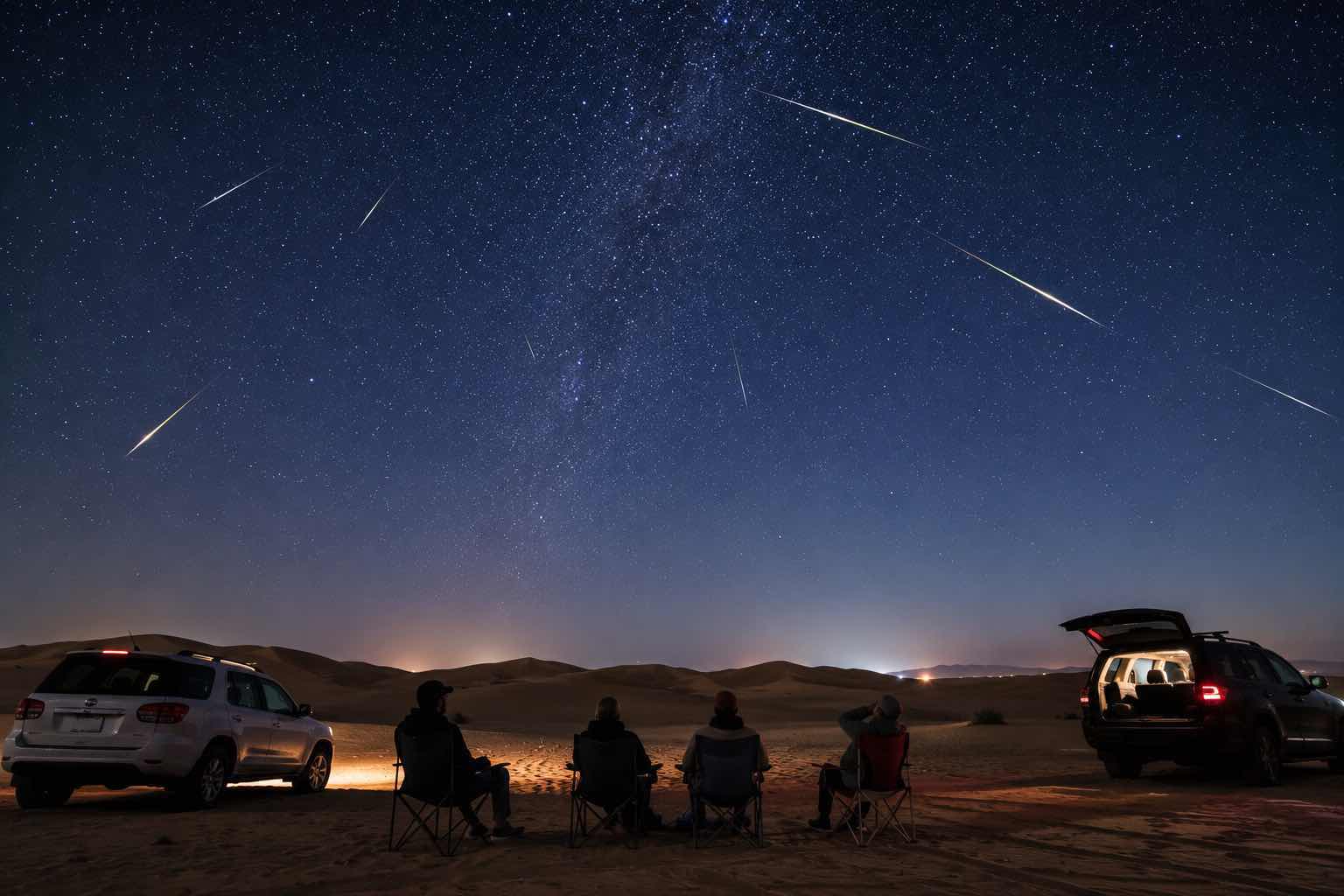
UAE stargazers are preparing for one of the best celestial displays of the year as the **Perseid meteor shower reaches its peak overnight on August 12–13, 2026**. But Dubai Astronomy Group has issued an important warning for anyone planning a last-minute desert trip: **do not independently enter Al Khatim Desert in Abu Dhabi to watch the shower**.
Although Al Khatim is known for its dark skies, much of the desert is **private land**, and independent public access is not permitted. Stargazers are being advised to use authorised viewing locations such as **Al Quaa Desert in Abu Dhabi or Al Qudra Desert in Dubai**, or attend an organised event with permission to operate at Al Khatim. ([Gulf News](https://gulfnews.com/uae/perseid-meteor-shower-dubai-astronomy-group-warns-stargazers-away-from-al-khatim-desert-1.500638505?utm_source=chatgpt.com))
## **Why is Dubai Astronomy Group warning people about Al Khatim?**
Al Khatim Desert has become increasingly popular among UAE astronomy enthusiasts because its distance from major urban areas provides darker skies and less light pollution.
However, Dubai Astronomy Group says people should not simply drive into the area and set up their own stargazing spot.
The reason is straightforward: **most of Al Khatim is private land**.
The group has advised people to respect property restrictions and, for their own safety, visit only authorised stargazing locations. ([Gulf News](https://gulfnews.com/uae/perseid-meteor-shower-dubai-astronomy-group-warns-stargazers-away-from-al-khatim-desert-1.500638505?utm_source=chatgpt.com))
## **Can you still watch the Perseids at Al Khatim?**
Yes — but there is an important distinction.
Visitors attending an **authorised astronomy or tourism event at a designated location** can access the area through that organised experience.
Dubai Astronomy Group itself has organised a Perseid observation event at a designated Al Khatim location. Earlier event information listed guided meteor watching, telescope observations, astronomy sessions and astrophotography opportunities. ([The National](https://www.thenationalnews.com/news/uae/2026/08/01/astronomers-in-uae-await-spectacular-meteor-shower-and-new-moon/?utm_source=chatgpt.com))
The warning is aimed at people planning to **drive independently into Al Khatim Desert and choose their own viewing location**.
## **Where should independent stargazers go instead?**
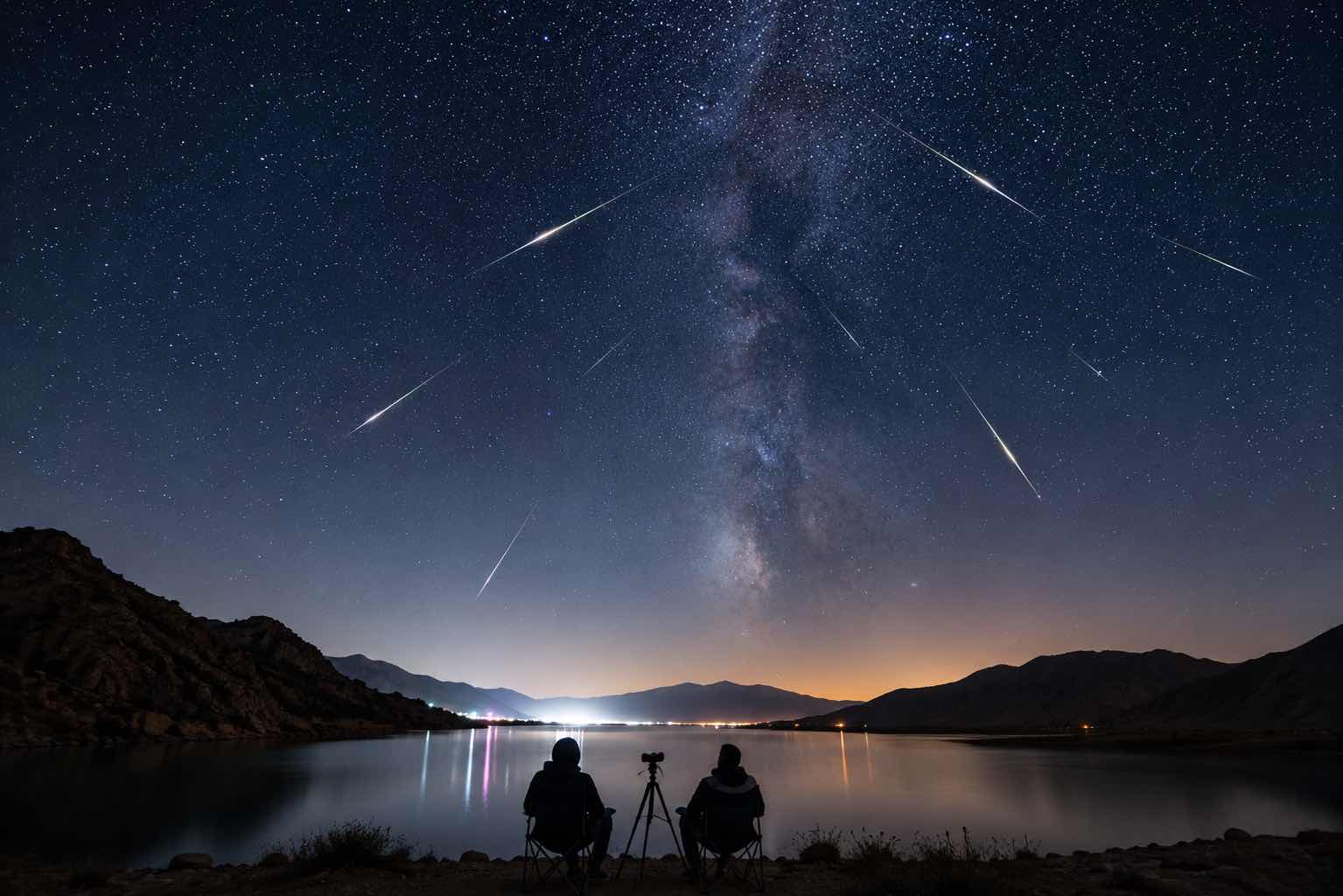
Dubai Astronomy Group specifically recommended two alternatives: **Al Quaa Desert in Abu Dhabi and Al Qudra Desert in Dubai**. ([Gulf News](https://gulfnews.com/uae/perseid-meteor-shower-dubai-astronomy-group-warns-stargazers-away-from-al-khatim-desert-1.500638505?utm_source=chatgpt.com))
### **Al Quaa Desert, Abu Dhabi**
Al Quaa is one of the darkest accessible stargazing areas in the UAE.
It is roughly a two-hour drive from Dubai and is popular with astrophotographers because of its extremely low light pollution.
The journey and desert terrain require more preparation than a typical city drive. Some areas are easier to reach than others, and drivers should avoid entering difficult off-road terrain unless they have a suitable vehicle and experience. ([Gulf News](https://gulfnews.com/uae/6-free-spots-in-the-uae-to-watch-perseids-meteor-showers-1.500638627?utm_source=chatgpt.com))
### **Al Qudra Desert, Dubai**
For Dubai residents looking for something closer, Al Qudra is the easier option.
It is approximately an hour from central Dubai and provides significantly darker skies than urban areas.
Established access points and nearby facilities also make it more practical for families or first-time stargazers. ([Gulf News](https://gulfnews.com/uae/6-free-spots-in-the-uae-to-watch-perseids-meteor-showers-1.500638627?utm_source=chatgpt.com))
Other darker UAE locations commonly used for stargazing include areas around Mleiha in Sharjah and Jebel Jais in Ras Al Khaimah, although visitors should always check local access restrictions before travelling. ([Gulf News](https://gulfnews.com/uae/6-free-spots-in-the-uae-to-watch-perseids-meteor-showers-1.500638627?utm_source=chatgpt.com))
## **When does the Perseid meteor shower peak in the UAE?**
The main viewing window is the **night of Wednesday, August 12 into the early hours of Thursday, August 13**.
The Perseids are active for several weeks, but this overnight period brings the shower’s peak activity. ([Time and Date](https://www.timeanddate.com/news/astronomy/perseid-meteor-shower-2026?utm_source=chatgpt.com))
For UAE observers, the strongest viewing conditions are expected **after midnight and into the pre-dawn hours**.
Dubai Astronomy Group guidance cited in local reports recommends approximately **midnight to 4am**, when the radiant is higher and the sky is darker. ([Gulf News](https://gulfnews.com/uae/perseid-meteor-shower-dubai-astronomy-group-warns-stargazers-away-from-al-khatim-desert-1.500638505?utm_source=chatgpt.com))
## **Why the 2026 Perseids are particularly special**
This year’s timing could make the display especially impressive.
The Perseid peak coincides with a **new moon**, meaning there will be virtually no bright moonlight washing out the fainter meteors.
That creates exceptionally dark natural viewing conditions, provided the observer is also away from city lights and the weather remains clear. ([Time and Date](https://www.timeanddate.com/news/astronomy/perseid-meteor-shower-2026?utm_source=chatgpt.com))
Under genuinely dark skies and ideal conditions, observers could potentially see **around 50 to 100 meteors per hour**during periods of peak activity.
That figure represents an ideal observational rate rather than a guarantee that every viewer will count 100 meteors in an hour. Actual visibility depends heavily on light pollution, atmospheric conditions, where you are looking and how long your eyes have adapted to darkness. ([Gulf News](https://gulfnews.com/uae/perseid-meteor-shower-dubai-astronomy-group-warns-stargazers-away-from-al-khatim-desert-1.500638505?utm_source=chatgpt.com))
## **What actually causes the Perseids?**
Despite the name “shooting stars,” the streaks have nothing to do with stars falling from the sky.
The Perseids occur when Earth passes through a trail of dust and debris left behind by **Comet 109P/Swift-Tuttle**.
Tiny particles enter Earth’s atmosphere at extremely high speeds — around **59 kilometres per second** — heating the surrounding air and creating the bright streaks visible from the ground. ([Gulf News](https://gulfnews.com/uae/up-to-100-meteors-an-hour-in-uae-why-perseids-2026-meteor-shower-is-unlike-any-other-1.500628216?utm_source=chatgpt.com))
The shower appears to originate near the constellation Perseus, which is where the Perseids get their name.
Swift-Tuttle last passed through the inner Solar System in 1992 and is expected to return in 2126. ([Gulf News](https://gulfnews.com/uae/perseid-meteor-shower-dubai-astronomy-group-warns-stargazers-away-from-al-khatim-desert-1.500638505?utm_source=chatgpt.com))
## **Do you need a telescope?**
No.
In fact, a telescope or binoculars can make meteor watching more difficult because they dramatically narrow your field of view.
Meteors can appear across a large section of the sky, so the best equipment is simply your eyes and a comfortable place to sit or lie down.
Allow approximately **20 to 30 minutes for your eyes to adjust to the darkness** before expecting the best view. ([Gulf News](https://gulfnews.com/uae/up-to-100-meteors-an-hour-in-uae-why-perseids-2026-meteor-shower-is-unlike-any-other-1.500628216?utm_source=chatgpt.com))
Avoid repeatedly checking a bright phone screen because this can disrupt your night vision.
## **How to get the best view tonight**
Choose an authorised location as far from city lighting as practical and arrive early enough to become familiar with the surroundings before settling in.
Once there, find an open area with a broad view of the sky. Lie back or use a reclining chair rather than concentrating on one small section of the sky.
Give your eyes at least 20 to 30 minutes to adapt, minimise phone use and be patient. Meteor activity can arrive in bursts, meaning several streaks may appear within a short period followed by quieter intervals. ([WIRED](https://www.wired.com/story/how-and-when-to-view-the-perseid-meteor-shower-august-2026?utm_source=chatgpt.com))
## **Don’t expect the sky to look like social media photos**
Long-exposure photographs and composite images can make meteor showers appear as though dozens of streaks are crossing the sky simultaneously.
That is generally not what observers see with the naked eye.
Even during a strong Perseid peak, individual meteors appear briefly and unpredictably across different parts of the sky.
The advertised hourly rate also assumes very dark skies and ideal conditions. Light pollution around Dubai, Abu Dhabi and Sharjah can significantly reduce the number of faint meteors visible.
## **Summer conditions matter too**
August stargazing in the UAE comes with another challenge: humidity.
Dubai Astronomy Group has noted that summer humidity can affect sky transparency and viewing quality across the country. ([Condé Nast Traveller Middle East](https://www.cntravellerme.com/story/its-uae-meteor-shower-season-heres-when-and-where-to-see-the-perseids-next-week?utm_source=chatgpt.com))
People heading into desert areas should also prepare for warm nighttime temperatures and carry sufficient drinking water.
Avoid driving deep into unfamiliar desert terrain simply to escape light pollution. A slightly brighter but safe and accessible viewing location is preferable to becoming stranded in an isolated area.
## **Can you watch the Perseids from Dubai city?**
Possibly, but expect to see fewer meteors.
The brightest Perseids and occasional fireballs may still be visible from darker neighbourhoods, beaches or open areas, but Dubai’s considerable light pollution will hide many of the fainter streaks.
Travelling to Al Qudra or another properly accessible dark-sky location will significantly improve your chances.
## **Why this matters**
The 2026 Perseid meteor shower offers UAE residents an unusually favourable opportunity to see one of astronomy’s most famous annual events.
A new moon means naturally dark skies, while peak activity could produce dozens of visible meteors under suitable conditions.
But the excitement around the event has also led more people to seek out remote desert locations.
Dubai Astronomy Group’s warning is therefore important: **Al Khatim Desert should not be treated as an unrestricted public stargazing site.**
If you are attending an authorised event there, follow the organiser’s directions. If you are heading out independently, choose an accessible and permitted location such as Al Quaa or Al Qudra instead.
The Perseids do not require expensive equipment or specialist knowledge. A legal dark-sky location, patience and a clear view overhead are enough.
## **FAQs**
### **When will the Perseid meteor shower peak in the UAE?**
The 2026 Perseids peak overnight on **August 12–13**, with some of the best viewing expected after midnight. ([Time and Date](https://www.timeanddate.com/news/astronomy/perseid-meteor-shower-2026?utm_source=chatgpt.com))
### **What is the best time to watch?**
For UAE viewers, approximately **midnight to 4am** offers a strong viewing window, with conditions generally improving as the night progresses. ([Gulf News](https://gulfnews.com/uae/perseid-meteor-shower-dubai-astronomy-group-warns-stargazers-away-from-al-khatim-desert-1.500638505?utm_source=chatgpt.com))
### **Why should I not independently visit Al Khatim Desert?**
Dubai Astronomy Group says most of Al Khatim is private land and independent public access is not permitted. Stargazers should use authorised locations or attend an organised event. ([Gulf News](https://gulfnews.com/uae/perseid-meteor-shower-dubai-astronomy-group-warns-stargazers-away-from-al-khatim-desert-1.500638505?utm_source=chatgpt.com))
### **Is the Dubai Astronomy Group event at Al Khatim still allowed?**
Yes. The restriction is different for authorised organised events operating at designated locations. Dubai Astronomy Group has organised its Perseid observation experience at an authorised site in the area. ([Gulf News](https://gulfnews.com/uae/perseid-meteor-shower-dubai-astronomy-group-warns-stargazers-away-from-al-khatim-desert-1.500638505?utm_source=chatgpt.com))
### **Where can I go instead?**
Dubai Astronomy Group specifically recommends **Al Quaa Desert in Abu Dhabi** and **Al Qudra Desert in Dubai** for independent stargazing. ([Gulf News](https://gulfnews.com/uae/perseid-meteor-shower-dubai-astronomy-group-warns-stargazers-away-from-al-khatim-desert-1.500638505?utm_source=chatgpt.com))
### **How many meteors could be visible?**
Under ideal dark-sky conditions, rates could reach approximately **50 to 100 meteors per hour**, although the actual number an individual sees may be substantially lower. ([Gulf News](https://gulfnews.com/uae/up-to-100-meteors-an-hour-in-uae-why-perseids-2026-meteor-shower-is-unlike-any-other-1.500628216?utm_source=chatgpt.com))
### **Do I need a telescope?**
No. The Perseids are best observed with the naked eye because meteors can appear anywhere across a wide section of the sky. ([WIRED](https://www.wired.com/story/how-and-when-to-view-the-perseid-meteor-shower-august-2026?utm_source=chatgpt.com))
### **Why is 2026 a particularly good year?**
The peak coincides with a **new moon**, removing moonlight that would normally make faint meteors harder to see. ([Time and Date](https://www.timeanddate.com/news/astronomy/perseid-meteor-shower-2026?utm_source=chatgpt.com))
## **Source Credits**
Information source and resource owners: Dubai Astronomy Group, Gulf News, Timeanddate, NASA-related astronomy guidance and cited UAE astronomy resources.
## **Image Credits**
Image sources are combined from AI-generated visuals and other platforms. If any owner wants to be mentioned or any content needs to be changed, please email us at **concerns@whatmatters.ae**.