From Pocket Money to Pre-Orders: The UAE School Canteen We Remember
By Thasmiya
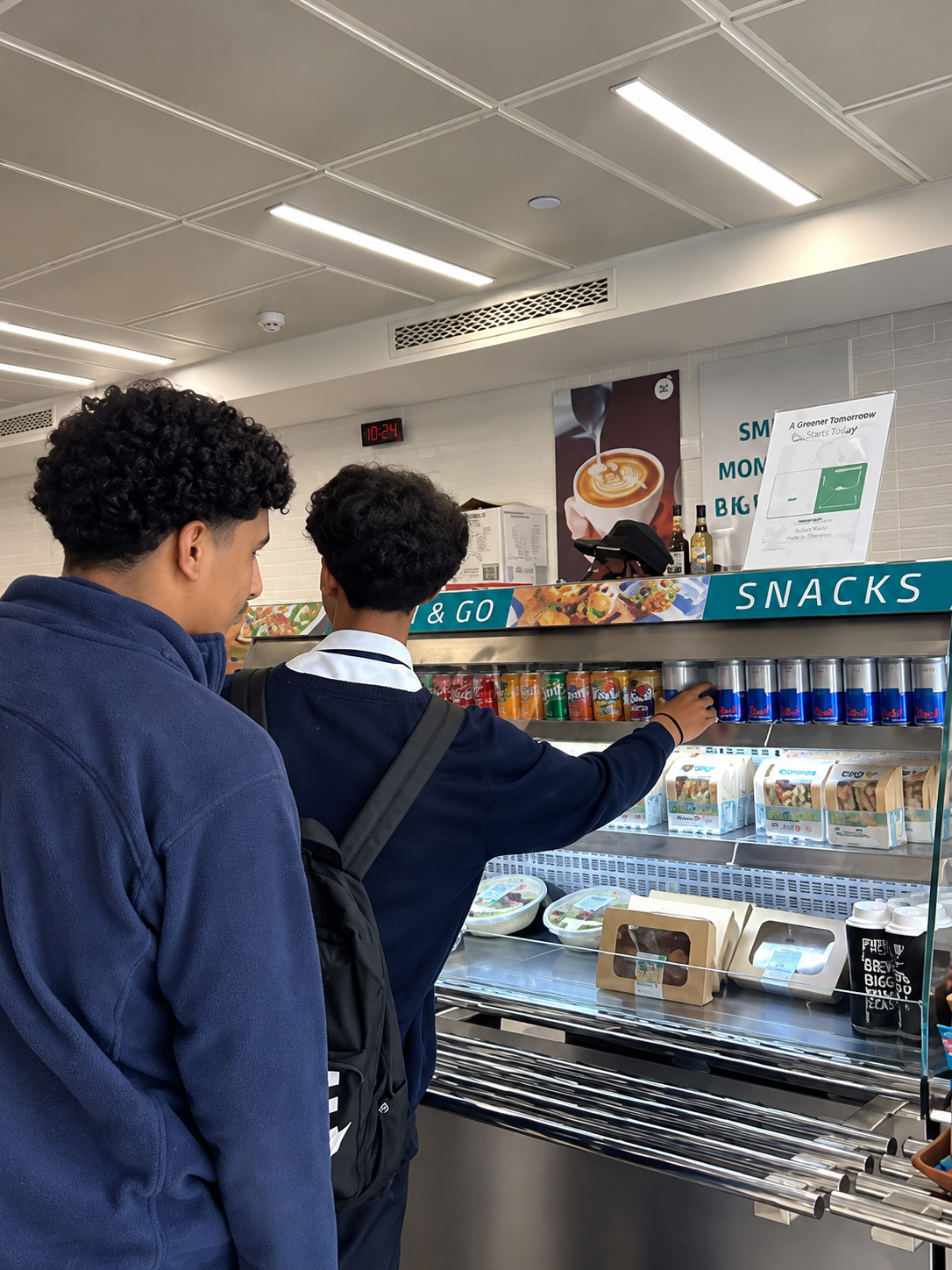
There was a time when buying lunch at school in the UAE required just three things: **a few dirhams, quick maths and the ability to reach the canteen before your favourite snack sold out**.
Before student cards, digital wallets and pre-ordering apps, break time meant coins in pockets, queues outside the tuck shop and friends asking to borrow “just one dirham.”
Today, school canteens are becoming increasingly digital and health-focused. Parents can top up accounts, browse menus and pre-order meals, while students can collect food without carrying cash. But for generations who grew up in UAE schools during the 1980s, 1990s and early 2000s, the old canteen experience remains a surprisingly powerful piece of nostalgia.
## **When AED 1 felt like serious money**
For many students, the school day started with a small decision from their parents: how much pocket money to give them.
AED 1, AED 2 or AED 5 could feel like a fortune.
Former UAE students have recalled buying a **samosa and Areej juice for just AED 1**, with each costing around 50 fils at the time. Others remember chicken puffs, vegetable puffs, cheese pizzas and chilled laban as canteen staples.
Having a note instead of a handful of coins could even make you feel unusually rich for the day.
## **The UAE school canteen menu we still remember**
Ask people who attended school in the UAE in the 1990s or early 2000s about their canteen and certain foods immediately come up.
Punjabi samosas were among the favourites. Then there were mini cheese pizzas, chicken and vegetable puffs, sandwiches, biscuits, chocolate, chips, Areej juice, Capri-Sun and laban.
Some schools had their own legendary items that students would rush to buy as soon as the recess bell rang.
The food was simple and inexpensive, but that was part of its appeal. A few dirhams could buy lunch, a drink and—if the budget allowed—something sweet.
## **The race to the canteen**
The recess bell did not simply mean break time.
It meant **go**.
Students would rush from classrooms hoping to reach the queue before everyone else. With breaks sometimes lasting only 20 or 30 minutes, there was not much time to queue, buy food, find friends and actually eat.
Reaching the counter only to hear that your favourite samosa or pizza was finished was its own kind of school-day heartbreak. Former students have recalled grouping their orders together or sending one friend ahead to save time.
## **“Give me one dirham, I’ll give it back tomorrow”**
The canteen also had its own economy.
Someone always had extra money. Someone always forgot theirs. And someone was always asking a friend for another dirham.
Sharing was just as important.
A samosa could be split between friends. Someone would ask for one sip of your juice and somehow drink half of it. One packet of chips could quickly become everyone’s packet of chips.
It was never really just about buying lunch. The canteen was one of the school’s biggest social spaces.
## **Finding forgotten money in your school bag**
There was also one small victory today’s digital wallets cannot quite recreate.
Finding an unexpected AED 1 coin at the bottom of your school bag.
Suddenly, the day’s options changed.
That forgotten coin could mean an extra juice, another snack or enough money to join your friends at the canteen after thinking you were broke.
For students who received a fixed daily or weekly allowance, managing those coins was also an early lesson in budgeting.
## **From cash to cards, QR codes and apps**
The UAE school canteen experience today can look completely different.
Some schools now use cashless systems where parents load money onto student accounts or cards. Others allow meals to be selected and pre-ordered through an app.
At Dubai International Academy Al Barsha, for example, its canteen system allows parents to load funds onto student cards, view menus and pre-order meals for younger students.
Other school-meal platforms allow parents to browse menus and order their child’s food before the school day even begins. HotOven, for example, describes its service as allowing parents to pre-order meals available through participating school canteens.
## **No cash, no lost lunch money**
The advantages are obvious.
Parents do not necessarily need to send children to school carrying cash. Digital systems can make it easier to monitor balances, plan meals and reduce time spent waiting at the counter.
Some smart canteen platforms also offer weekly menus, dietary information, wallet top-ups and meal tracking.
For schools, knowing orders in advance can also make food preparation and stock management easier.
## **UAE school canteens are becoming healthier too**
The change is not only technological.
Dubai Municipality’s **Promoting Healthy Nutrition in Educational Institutions** initiative aims to encourage healthier and more sustainable food choices across educational institutions, with a target of reaching more than 300,000 students.
The UAE’s School Canteen Lab initiative also focuses on improving nutritious options while involving students in developing healthier school meals and considering their preferences.
So today’s canteen is increasingly becoming part food counter, part digital service and part nutrition programme.
## **Convenient? Absolutely. But something changed**
There is little argument that modern systems are more convenient.
Parents can manage spending. Students are less likely to lose lunch money. Meals can be ordered ahead. Queues can become shorter.
But convenience also removes some of the chaos that made the old UAE school canteen memorable.
There is no digging through the school bag for coins.
No calculating whether AED 3 is enough for a samosa, juice and something extra.
No wondering whether the pizza will still be there when you reach the front.
And perhaps fewer negotiations with your best friend over that missing one dirham.
## **The canteen was never really about the food**
Years later, many former students probably cannot remember what happened during a particular maths or science lesson.
But mention the school canteen and memories return surprisingly quickly.
The sound of coins on the counter.
The rush when the bell rang.
The cold juice after standing outside.
The friend who always wanted a bite.
The snack that always sold out.
The excitement when your parents gave you an extra dirham that morning.
Technology has made the UAE school canteen faster, safer and easier to manage.
But for the generation that grew up carrying pocket money to school, those few dirhams bought something an app cannot quite recreate: **a small piece of childhood.**
## **Why this matters**
The evolution of UAE school canteens is a small reflection of how everyday life in the country has changed.
What was once a simple tuck shop built around coins, queues and inexpensive snacks is gradually becoming a digitally managed food service with cashless payments, pre-orders and greater attention to nutrition.
The new system may be smarter.
But ask anyone who grew up here about the old school canteen, and chances are they still remember exactly what they ordered.
## Related Reads - [Why Is Dubai One of the World’s Richest Cities?](/post/dubai-one-worlds-richest-cities) - [Cost of Living in Dubai 2026: How Much Do You Really Need Each Month?](/post/cost-living-dubai-2026-much-do-really-need) - [iOS 27 Release Date: When Is It Coming to Your iPhone — and What’s New?](/post/ios-27-release-date-when-coming-iphone-whats) - [Dubai vs Abu Dhabi: Cost of Living, Jobs and Lifestyle Compared in 2026](/post/dubai-vs-abu-dhabi-cost-living-jobs-lifestyle) - [More stories like this](/category/lifestyle)