Toyota Building Demolition: What Dubai Tenants Need to Know About Partitions and Eviction
By Thasmiya
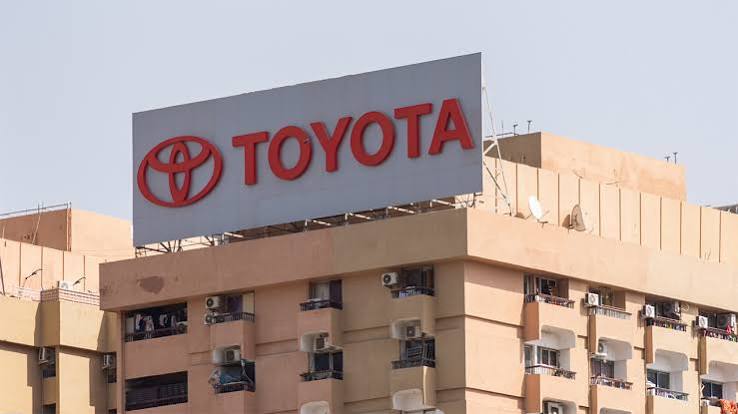
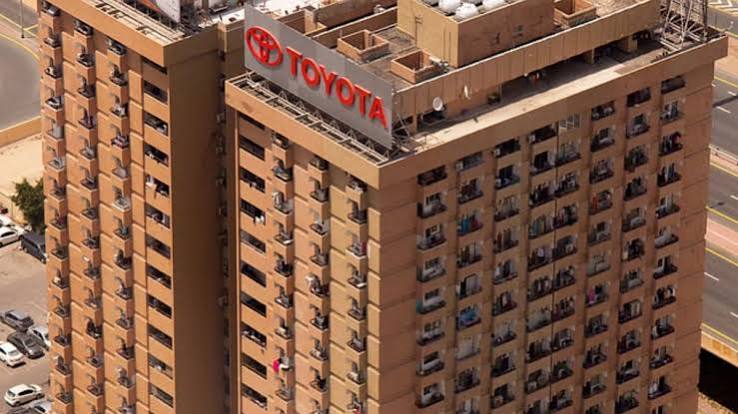
Dubai’s famous **Toyota Building on Sheikh Zayed Road is preparing for its final chapter**, with the landmark residential tower scheduled for demolition in 2027.
Officially called the **Nasser Rashid Lootah Building**, the 15-storey tower has stood on Sheikh Zayed Road since 1974. It became popularly known as the Toyota Building after the large Toyota sign was first installed on its rooftop in 1981. ([@theweek](https://www.theweek.in/news/middle-east/2026/08/20/why-is-dubai-demolishing-the-famous-toyota-building.html?utm_source=chatgpt.com))
But behind the nostalgia surrounding its demolition is an important issue for Dubai renters: **illegal partitions, overcrowding and the rules governing when tenants can be asked to leave a property.**
Here is what residents need to know.
## **Why is the Toyota Building being demolished?**
The building’s management has confirmed that the property is scheduled for demolition in **2027**, although an exact demolition date has not yet been announced. ([@theweek](https://www.theweek.in/news/middle-east/2026/08/20/why-is-dubai-demolishing-the-famous-toyota-building.html?utm_source=chatgpt.com))
Reports citing the building management say Dubai Municipality did not approve further maintenance work because of the building’s condition, leading to preparations for evacuation and eventual demolition. ([@theweek](https://www.theweek.in/news/middle-east/2026/08/20/why-is-dubai-demolishing-the-famous-toyota-building.html?utm_source=chatgpt.com))
The tower has been part of Dubai’s skyline for more than five decades and contains one-, two- and three-bedroom apartments.
## **What happened with the partitioned apartments?**
The evacuation attracted wider attention because many apartments had reportedly been divided into multiple rooms.
According to reports citing the building’s real estate management, some partitioned apartments were housing **as many as 15 people**. Authorities instructed management to clear overcrowded units, and people living in partitioned rooms were among the first residents asked to leave. ([@theweek](https://www.theweek.in/news/middle-east/2026/08/20/why-is-dubai-demolishing-the-famous-toyota-building.html?utm_source=chatgpt.com))
The action was linked to concerns over unauthorised partitions and overcrowded accommodation rather than simply the age of the building.
As the evacuation progressed, other residents—including people staying in company accommodation—also began moving out as preparations for demolition continued. ([@theweek](https://www.theweek.in/news/middle-east/2026/08/20/why-is-dubai-demolishing-the-famous-toyota-building.html?utm_source=chatgpt.com))
## **Are partitions illegal in Dubai?**
Not every form of shared housing should automatically be described as illegal.
Dubai introduced **Law No. 4 of 2026 regulating the management and occupancy of shared housing**, creating a formal framework for properties designated for shared accommodation. The law is intended to ensure safe and healthy living conditions and regulate owners, operators and residents of approved shared housing. ([PDD Portal](https://pddportalstg.dubai.gov.ae/en/media-listing/news-events/mohammed-bin-rashid-issues-law-regulating-management-occupancy-of-shared-housing-in-dubai/?utm_source=chatgpt.com))
The problem arises when apartments are altered, subdivided, overcrowded or sublet without the required approvals.
Unauthorised internal structures can interfere with ventilation, emergency exits and fire-safety systems and can result in more people occupying a unit than it was designed to accommodate. Dubai authorities have previously carried out inspections targeting these conditions. ([Gulf News](https://gulfnews.com/living-in-uae/housing/dubais-crackdown-on-illegal-room-partitions-what-renters-need-to-know-1.500180604?utm_source=chatgpt.com))
## **Can a tenant sublet an apartment?**
Dubai Rental Law gives landlords grounds to seek eviction where a tenant sublets the property—or part of it—without the landlord’s written approval. ([Dubai Land Department](https://dlp.dubai.gov.ae/Legislation%20Reference/2007/Law%20No.%20%2826%29%20of%202007.html?utm_source=chatgpt.com))
This is particularly important for people renting bed spaces or partition rooms.
If you are paying someone who is themselves the tenant rather than the property owner or an authorised operator, you should establish whether the arrangement has the necessary approval.
A cheap room advertised online does not automatically mean it is legally approved shared accommodation.
## **Can tenants make their own partitions?**
Tenants should not assume they can divide an apartment simply because they hold the Ejari contract.
Dubai Rental Law allows eviction action where alterations endanger the property’s safety or where the property is used in a way that violates planning, construction or land-use regulations. ([Dubai Land Department](https://dlp.dubai.gov.ae/Legislation%20Reference/2007/Law%20No.%20%2826%29%20of%202007.html?utm_source=chatgpt.com))
Before making structural or internal modifications, tenants should obtain the necessary consent and approvals.
This is particularly important for partitions used to create additional bedrooms or bed spaces.
## **Why are illegal partitions a safety issue?**
Partitions can become dangerous when they substantially increase the number of people living inside an apartment.
Additional walls can affect escape routes and potentially interfere with fire-safety arrangements, ventilation and access during an emergency.
Overcrowding compounds those risks.
Dubai’s enforcement against illegal partitions therefore goes beyond rental-contract disputes—it is also a building and resident-safety issue. ([The National](https://www.thenationalnews.com/news/uae/2025/06/28/dubai-illegal-partition-eviction-room-rent-bed-space/?utm_source=chatgpt.com))
## **Can a landlord evict a tenant because a building will be demolished?**
Yes, but Dubai has specific rules governing demolition-related eviction.
Dubai Land Department states that when a landlord wants to demolish a property and rebuild it, the necessary licences must first be obtained from the competent authorities.
The tenant must also be notified of the eviction **through a notary public or registered mail at least 12 months before the required eviction date**. ([Dubai Land Department](https://dubailand.gov.ae/en/frequently-asked-questions?utm_source=chatgpt.com))
This is important because an informal WhatsApp message or verbal request should not automatically be treated as equivalent to the statutory demolition notice required under the rental framework.
Different circumstances can apply where a competent government authority has condemned a property or requires evacuation for safety reasons.
## **What about the Toyota Building’s existing tenants?**
Current reports citing the Toyota Building’s property management state that residents holding existing valid rental contracts may remain until **December 2026**. ([Property News International](https://www.propertynewsint.com/en-ae/news/dubai-s-famous-toyota-building-set-for-demolition-in-2027?utm_source=chatgpt.com))
However, many residents have already relocated.
Reports published during the evacuation have given different figures for the percentage already vacated—ranging from about 70% during earlier stages to reports of around 95% as the process progressed. ([@theweek](https://www.theweek.in/news/middle-east/2026/08/20/why-is-dubai-demolishing-the-famous-toyota-building.html?utm_source=chatgpt.com))
Residents should therefore rely on their individual tenancy documentation and direct communication from building management rather than assuming that another resident’s deadline automatically applies to them.
## **What if you live in a partition room?**
If you currently live in a partitioned apartment anywhere in Dubai, not just the Toyota Building, check the legal status of your accommodation.
Find out who holds the main tenancy contract, whether the landlord has approved subletting, whether the property is authorised for the way it is being occupied and whether alterations to the apartment have the required approvals.
Keep copies of payments, agreements and communication with the person renting the space to you.
If authorities or building management order the accommodation to be cleared, do not ignore the instruction simply because you have been paying rent.
## **What should regular Ejari tenants do if they receive an eviction notice?**
First, check **why** you are being asked to leave.
Then check how the notice was delivered and the date on which you are expected to vacate.
Keep your Ejari certificate, tenancy contract, payment records, security-deposit receipt and all correspondence with the landlord or management.
For a standard landlord-led demolition and reconstruction eviction, Dubai Land Department states that the landlord needs the required licences and must provide the prescribed 12-month notice through a notary public or registered mail. ([Dubai Land Department](https://dubailand.gov.ae/en/frequently-asked-questions?utm_source=chatgpt.com))
If you believe the notice does not comply with Dubai Rental Law, seek guidance from Dubai Land Department or the Rental Disputes Center rather than simply refusing to move.
## **What if the building is declared unsafe?**
This is different from an ordinary landlord deciding to redevelop a property.
Dubai Rental Law provides grounds for eviction where a property has been condemned, provided this is established through a technical report attested by Dubai Municipality. ([Dubai Land Department](https://dlp.dubai.gov.ae/Legislation%20Reference/2007/Law%20No.%20%2826%29%20of%202007.html?utm_source=chatgpt.com))
Safety orders from competent authorities can therefore create different circumstances from a normal end-of-tenancy eviction.
Residents should carefully establish whether they are dealing with a landlord’s redevelopment request, an illegal-partition enforcement action or an official safety-related evacuation.
## **What tenants across Dubai can learn from the Toyota Building**
The Toyota Building story highlights an important distinction.
**Demolition, illegal partitions and overcrowding are separate issues even when they occur in the same building.**
A resident with a valid registered tenancy contract may have different rights and deadlines from someone occupying an unauthorised partition or bed space.
Likewise, a landlord seeking possession for redevelopment normally has procedural requirements to follow, while authorities can intervene separately where accommodation presents regulatory or safety problems.
## **Before renting a partition or shared room in Dubai**
Do not choose accommodation based only on price and location.
Ask who legally rents or owns the apartment.
Confirm whether subletting is authorised.
Avoid accommodation where large numbers of residents have been squeezed into makeshift rooms.
Check that exits and common areas remain accessible.
Request documentation rather than relying entirely on verbal assurances.
And if something about the accommodation appears unsafe or unofficial, investigate before paying a large deposit or several months of rent.
## **An icon approaching its final year**
The Nasser Rashid Lootah Building was completed in **1974**, when the Sheikh Zayed Road skyline looked dramatically different from today.
Its famous Toyota rooftop sign followed in 1981 and became such a familiar landmark that generations of Dubai residents began referring to the entire tower simply as the Toyota Building. Toyota UAE restored the sign in 2022 after it had been absent for several years. ([Property News International](https://www.propertynewsint.com/en-ae/news/dubai-s-famous-toyota-building-set-for-demolition-in-2027?utm_source=chatgpt.com))
The planned demolition in 2027 will therefore remove more than an ageing residential building. It will erase one of the most recognisable surviving pieces of early Sheikh Zayed Road from the skyline.
For tenants, however, the story also carries a practical reminder: **know your tenancy status, understand whether your shared accommodation is authorised, and know your rights when an eviction notice arrives.**
## **Source Credits**
Information source and resource owners: Dubai Land Department, Government of Dubai legislation portal, Dubai Municipality, Nasser Rashid Lootah Building management, Toyota UAE and UAE media reports.
Image sources are combined from publicly available editorial and official resources. All image rights remain with their respective copyright owners.
For concerns or corrections: concerns@whatmatters.ae