UAE Enters Suhail Season, But Fog Keeps Famous Star Out of Sight
By Thasmiya
The UAE officially entered the traditional **Suhail season on Monday, August 24, 2026**, a date that has long been associated with the gradual retreat of the country’s most intense summer heat.
But anyone who woke up early hoping to spot the famous star was likely disappointed.
Although Suhail began its annual rise as expected, **high humidity and fog prevented it from being clearly seen with the naked eye across the UAE on Monday morning**. ([Gulf News](https://gulfnews.com/uae/weather/uae-enters-suhail-season-but-fog-keeps-famous-star-out-of-sight-1.500650509?utm_source=chatgpt.com))
The good news? Astronomers say clearer viewing opportunities should arrive over the coming days.
## **What is the Suhail star?**
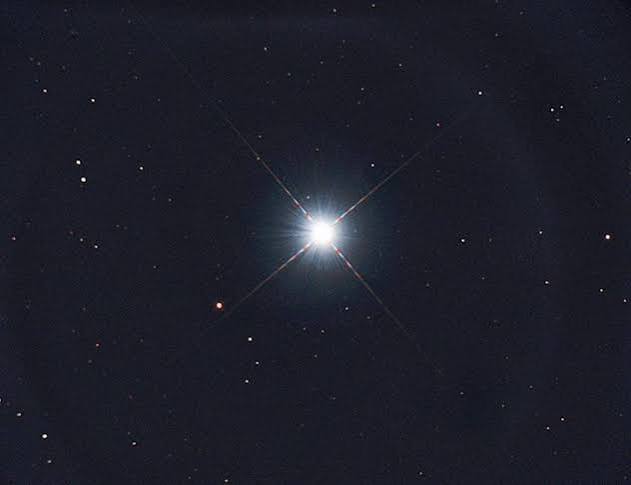
Suhail is the Arabic name for **Canopus**, one of the brightest stars visible from Earth.
It is the **second-brightest star in the night sky after Sirius** and lies roughly 310 light-years away. That means the light reaching the UAE today began travelling towards Earth around 310 years ago. ([Gulf News](https://gulfnews.com/uae/weather/uae-enters-suhail-season-but-fog-keeps-famous-star-out-of-sight-1.500650509?utm_source=chatgpt.com))
For generations, communities across the Arabian Peninsula have used Suhail as an important natural marker for changing seasons.
Its annual appearance traditionally signals that the most intense part of summer is beginning to retreat.
## **Suhail rose on August 24 — but UAE residents couldn’t see it**
Astronomically, Suhail began its seasonal rise on **August 24**, appearing very low above the south-eastern horizon before sunrise.
However, seeing a star so close to the horizon requires favourable conditions.
Ibrahim Al Jarwan, Chairman of the Emirates Astronomy Society, attempted to observe Suhail from Khor Fakkan on Monday morning, but humidity of **80% or higher**, together with fog, obscured the view. ([Khaleej Times](https://www.khaleejtimes.com/uae/suhail-star-rises-hidden-view-high-humidity-fog?amp=1&utm_source=chatgpt.com))
Al Jarwan explained that while the astronomical timing of Suhail’s rise remains relatively consistent each year, weather conditions determine whether people can actually see it.
## **When will you be able to see Suhail?**
Residents should have better opportunities over the coming days if skies become clearer.
According to Al Jarwan, Suhail can normally be spotted approximately **40 minutes before sunrise**, very low above the **south-eastern horizon**. ([Gulf News](https://gulfnews.com/uae/weather/uae-enters-suhail-season-but-fog-keeps-famous-star-out-of-sight-1.500650509?utm_source=chatgpt.com))
While August 24 is its calculated annual rising date, observations over the past decade have generally occurred between **August 26 and 28** because atmospheric conditions can make the earliest appearance difficult to see. ([Khaleej Times](https://www.khaleejtimes.com/uae/suhail-star-rises-hidden-view-high-humidity-fog?utm_source=chatgpt.com))
For the best chance of spotting it, look towards a clear south-eastern horizon before sunrise and choose somewhere away from buildings, bright lights, fog, dust and heavy haze.
## **Interestingly, Suhail had already been photographed**
While Monday’s naked-eye observation was blocked by fog, Dubai’s Islamic Affairs and Charitable Activities Department announced that an astronomical observation team successfully documented Suhail using **astronomical photography and telescopic observation on August 22 and 23**.
The department said the observations formed part of ongoing efforts to document astronomical phenomena connected to UAE heritage and calendar calculations. ([دائرة الشؤون الإسلامية والعمل الخيري](https://iacad.gov.ae/ar/media/news/iacad-documents-the-earliest-telescopic-observation-of-suhail-through-astronomical-photography-and?utm_source=chatgpt.com))
So Suhail was there — Monday’s weather simply made seeing it with the naked eye difficult.
## **Does Suhail mean UAE summer is over?**
Not immediately.
Suhail is better understood as the **beginning of the end of peak summer heat**, rather than the arrival of cool weather.
Temperatures generally begin declining gradually after around August 20, but hot conditions are expected to continue through the end of September.
Humidity can also increase during this transitional period, bringing foggy mornings like the one experienced on August 24. ([Gulf News](https://gulfnews.com/uae/weather/uae-enters-suhail-season-but-fog-keeps-famous-star-out-of-sight-1.500650509?utm_source=chatgpt.com))
So don’t put away the sunscreen just yet.
## **What is the Sufriya period?**
The arrival of Suhail begins a roughly **40-day transitional period known as Sufriya**.
During this period, the UAE gradually moves away from peak summer conditions.
The first noticeable changes are often felt during the night and early morning, while daytime temperatures can remain high throughout September. More settled seasonal conditions traditionally begin around the middle of October with the arrival of the **Wasm season**. ([Khaleej Times](https://www.khaleejtimes.com/uae/suhail-star-rises-hidden-view-high-humidity-fog?amp=1&utm_source=chatgpt.com))
## **How did Suhail help people before modern weather forecasts?**
Long before weather apps and meteorological satellites, Suhail acted as a natural calendar across the Arabian Peninsula.
Its appearance helped communities anticipate changes affecting **agriculture, fishing, livestock and travel**.
Traditional signs associated with Suhail include cooler ground and water temperatures around dawn, soil retaining moisture for longer, changes in vegetation and the arrival of certain migratory birds.
Fish also begin moving closer to the coastline as sea temperatures gradually decline, while farmers traditionally start preparing for the coming agricultural season. ([Gulf News](https://gulfnews.com/uae/weather/uae-enters-suhail-season-but-fog-keeps-famous-star-out-of-sight-1.500650509?utm_source=chatgpt.com))
## **Suhail and the UAE’s Al Duroor calendar**
Suhail is also closely connected with the traditional **Al Duroor astronomical calendar**.
The system divides the year into **36 periods of 10 days** and was historically used to track seasonal conditions, rainfall, winds, planting and harvesting periods, fishing seasons and bird migration. ([Khaleej Times](https://www.khaleejtimes.com/uae/suhail-star-rises-hidden-view-high-humidity-fog?amp=1&utm_source=chatgpt.com))
This explains why Suhail remains culturally significant in the UAE even in an era of advanced weather forecasting.
## **When will the UAE actually start feeling cooler?**
The change will be gradual.
Late August marks the beginning of the transition away from peak summer.
September can still remain very hot, particularly during the daytime, while humidity may make coastal areas feel uncomfortable.
Conditions generally become progressively better through October, with noticeably more comfortable outdoor weather arriving later in the season.
Suhail therefore isn’t a switch that turns summer off overnight. It is a centuries-old sign that **the long journey towards cooler UAE weather has begun**.
## **Why this matters**
August 24 is much more than another date on the UAE weather calendar.
The annual return of Suhail connects modern UAE residents with generations of people who watched the same star to understand when the seasons were changing.
Fog may have hidden Suhail from naked-eye observers on its first morning of the 2026 season, but its arrival still carries the same message it has for centuries:
**Peak summer is gradually beginning to loosen its grip.**
## **Source Credits**
Information source and resource owners: Emirates Astronomy Society, Dubai Islamic Affairs and Charitable Activities Department, Gulf News, Khaleej Times, The National, WAM and Sharjah24.
Image sources are combined from official astronomy organisations, UAE government entities and credited UAE media resources.