UAE Hits 50°C as Powerful Heatwave Grips the Arab World
By Heba
UAE Hits 50°C as Powerful Heatwave Grips the Arab World
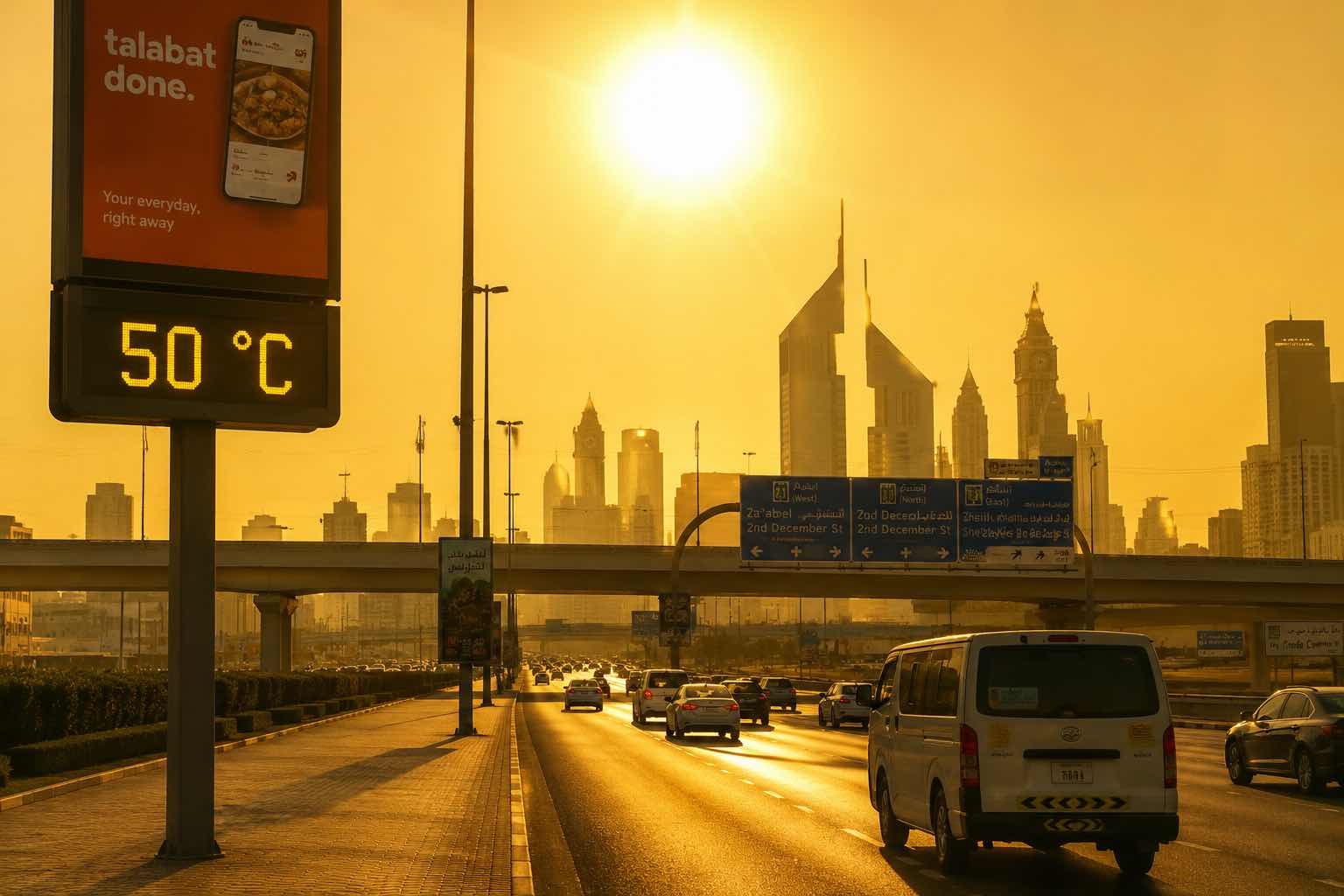
The UAE has recorded its first **50°C temperature of the summer**, as an intense heatwave continues to affect large parts of the Arabian Peninsula and neighbouring countries.
The National Centre of Meteorology (NCM) confirmed that temperatures reached **50°C** in parts of the UAE, with authorities urging residents to take precautions against extreme heat, dehydration and prolonged sun exposure.
The heatwave comes as several countries across the Arab world experience unusually high temperatures, driven by a strong high-pressure system dominating the region.
## **UAE records first 50°C of the season**
According to the NCM, the mercury climbed to **50°C** at one of its weather monitoring stations, marking one of the hottest days recorded in the UAE this summer.
Across much of the country, daytime temperatures remained in the upper 40s, while humidity increased in coastal areas, making conditions feel even hotter.

Night-time temperatures also stayed unusually high, offering little relief after sunset.
## **Why is it so hot?**
Meteorologists say the heatwave is being caused by a persistent high-pressure system over the Arabian Peninsula.
These weather systems:
- Trap hot air near the surface - Suppress cloud formation - Increase sunshine hours - Reduce the chances of rainfall - Keep temperatures elevated for several consecutive days
Combined with the UAE’s desert climate, these conditions can push daytime temperatures close to or above 50°C.
## **Heatwave affects several Arab countries**
The extreme temperatures are not limited to the UAE.
Several countries across the region have also experienced scorching conditions, including:
- Saudi Arabia - Oman - Kuwait - Qatar - Bahrain - Iraq
Some areas have recorded temperatures approaching or exceeding 50°C, making this one of the most intense regional heatwaves of the season.
## **Humidity adds to discomfort**
While inland areas experience dry desert heat, coastal cities such as Dubai, Abu Dhabi and Sharjah often face another challenge—high humidity.
Humidity can make the “feels-like” temperature significantly higher than the actual air temperature by reducing the body’s ability to cool itself through sweating.
Residents may notice:
- Sticky outdoor conditions - Reduced comfort after sunset - Increased fatigue - Higher risk of heat-related illnesses
## **NCM forecasts continued hot weather**
The National Centre of Meteorology expects generally fair weather to continue, with partly cloudy conditions developing over some eastern areas during the afternoon.
Forecast highlights include:
- Maximum temperatures in the mid to upper 40s - Light to moderate winds, becoming fresh at times - Blowing dust in exposed areas - Humid conditions during the night and early morning over coastal regions - Possibility of mist or fog in some areas before sunrise
Residents should continue monitoring official weather updates as conditions may vary across the country.
## **Health risks during extreme heat**
Doctors warn that prolonged exposure to temperatures near 50°C can increase the risk of:
- Heat exhaustion - Heatstroke - Dehydration - Dizziness - Muscle cramps - Fatigue - Sunburn
Young children, older adults, outdoor workers and people with chronic health conditions are particularly vulnerable.
## **How to stay safe**
Authorities recommend taking the following precautions during periods of extreme heat:
- Drink plenty of water throughout the day - Avoid direct sunlight during the hottest hours (typically between noon and 4pm) - Wear lightweight, light-coloured clothing - Use sunscreen outdoors - Stay in air-conditioned environments where possible - Never leave children or pets inside parked vehicles - Take frequent breaks if working outdoors
Employers are also reminded to follow the UAE’s midday break regulations for outdoor workers during the summer months.
## **Impact on daily life**
Extreme temperatures can affect several aspects of daily life, including:
- Increased electricity demand due to air conditioning - Higher water consumption - Reduced outdoor activity - Greater strain on vehicles, particularly tyres and batteries - Increased wildfire risk in dry areas
Drivers are encouraged to check tyre pressure regularly, as excessive heat can increase the risk of tyre blowouts.
## **Looking ahead**
Forecasts indicate that hot summer conditions are likely to continue across much of the UAE over the coming days.
While isolated convective clouds may develop over eastern mountainous areas during some afternoons, widespread cooling is not currently expected.
Residents should continue to monitor updates issued by the National Centre of Meteorology.
## **Why this matters**
Temperatures reaching **50°C** highlight the intensity of summer across the UAE and much of the Arab world.
Extreme heat can affect public health, transport, infrastructure and outdoor work, making it essential for residents to stay hydrated, avoid unnecessary exposure during peak hours and follow official weather advisories.
With climate experts expecting more frequent extreme heat events globally, adapting to prolonged high temperatures is becoming increasingly important for communities across the region.
## **FAQs**
### **Where did the UAE reach 50°C?**
The National Centre of Meteorology confirmed that one of its weather stations recorded **50°C**, marking one of the hottest days of the summer.
### **Why is the UAE experiencing such high temperatures?**
A strong high-pressure system over the Arabian Peninsula is trapping hot air, resulting in prolonged periods of extreme heat and clear skies.
### **Which other countries are affected?**
The heatwave is also impacting Saudi Arabia, Oman, Kuwait, Qatar, Bahrain and Iraq, among other parts of the Arab world.
### **Is humidity making it feel hotter?**
Yes. Coastal areas experience high humidity, which increases the “feels-like” temperature and makes outdoor conditions more uncomfortable.
### **What should residents do during extreme heat?**
Stay hydrated, avoid direct sunlight during peak afternoon hours, wear light clothing, use sunscreen and remain in air-conditioned spaces whenever possible.
### **Will temperatures remain high?**
The NCM forecasts continued hot weather over the coming days, with daytime temperatures remaining in the upper 40s across many parts of the UAE.
## **Source Credits**
Information source and resource owners: UAE National Centre of Meteorology (NCM), World Meteorological Organization (WMO) and relevant regional meteorological authorities.
## **Image Credits**
Image sources are combined from AI-generated visuals and other platforms. If any owner wants to be mentioned or any content needs to be changed, please email us at **concerns@whatmatters.ae**.