UAE Population by Nationality: Indians, Pakistanis, Filipinos and More
By Chris
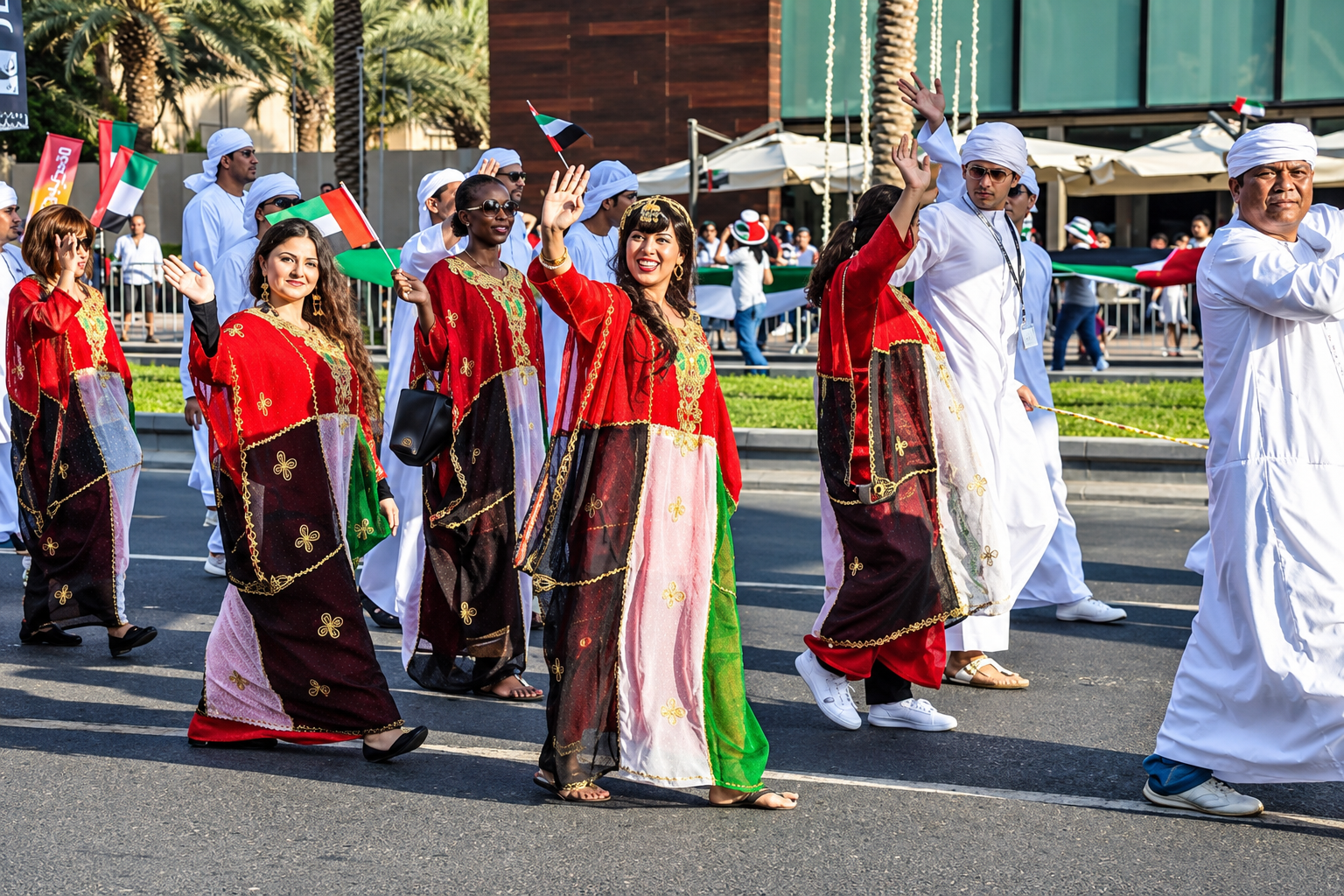
The UAE is one of the most multicultural countries in the world, with roughly **200 nationalities** living and working across the seven emirates.
Official Federal Competitiveness and Statistics Centre data puts the UAE population at **11.29 million in 2024**, the latest official nationwide figure currently highlighted by the authority. However, there is an important catch when looking at population by nationality: the UAE does **not publish a single current official breakdown covering every nationality**. Community figures therefore come from embassies, diplomatic missions and other demographic estimates and may refer to different years.
## **Indians are the UAE’s largest expatriate community**
Indians form by far the largest foreign community in the UAE.
The Embassy of India in Abu Dhabi estimates that approximately **4.3 million Indian nationals** were living in the UAE based on 2024 data, representing roughly **35% of the country’s population** by its estimate.
The community spans virtually every part of the UAE economy, from construction and hospitality to healthcare, technology, finance, entrepreneurship and senior corporate roles.
The embassy says Kerala is the most represented Indian state, followed by Tamil Nadu, Andhra Pradesh and Telangana, while sizeable communities also originate from Uttar Pradesh, Bihar, Punjab and other states.
## **Pakistanis are another major UAE community**
Pakistanis make up one of the UAE’s largest expatriate populations.
Recent demographic compilations place the Pakistani community at approximately **1.7 million to 1.9 million people**. Unlike the Indian figure above, this should be treated as an estimate rather than a current UAE government census figure.
The Pakistani community has a long history in the Emirates and is particularly visible across transport, construction, retail, hospitality, professional services and business ownership.
## **Bangladeshis**
Bangladeshis also represent one of the country’s largest expatriate communities.
Available recent estimates vary considerably, with figures ranging from around **840,000 to 1.2 million** depending on the source and reference year. This variation is a good example of why UAE nationality figures should not be presented as if they came from one unified 2026 census.
Bangladeshi residents work across sectors including construction, transport, hospitality, retail and services.
## **Filipinos**
The Filipino community is another major part of everyday life in the UAE.
Recent estimates put the number of Filipinos at approximately **700,000 to 800,000**, with a 2026 demographic compilation listing around 700,000.
Filipino professionals are particularly prominent across healthcare, hospitality, aviation, retail, education, engineering, customer service and creative industries.
Dubai and Abu Dhabi are major centres for the Filipino community, although Filipino residents live and work throughout the country.
## **Emiratis**
UAE citizens remain a minority within the country’s overall population because of the exceptionally large expatriate workforce.
Frequently cited recent demographic estimates put the Emirati population at around **1.31 million**, although this figure should also be distinguished from the FCSC’s official total-population statistic.
Emiratis remain at the centre of the country’s national identity, government, culture and long-term development strategy.
## **Iranians**
The UAE has longstanding commercial and cultural connections with Iran, particularly through Dubai and the northern Gulf.
Recent estimates place the Iranian population at approximately **540,000 to 600,000**.
Dubai has historically been an important centre for Iranian businesses and families because of its geographic proximity and trading links across the Gulf.
## **Nepalese**
Nepal also has a sizeable expatriate community in the Emirates.
Available estimates place the Nepalese population at approximately **360,000 to 450,000**, although the underlying figures come from different years.
Nepalese residents work across hospitality, security, aviation, retail, logistics and other service industries.
## **Egyptians**
Egyptians form one of the UAE’s largest Arab expatriate communities.
Available estimates range around **400,000 to 480,000**, although some of the underlying population figures are older than those available for other nationalities.
The community is represented across education, media, healthcare, engineering, government-related work and private-sector businesses.
## **Sri Lankans**
The UAE also has a substantial Sri Lankan community.
One widely referenced estimate places the population at approximately **300,000**, while other demographic datasets have cited around 360,000. Again, the difference reflects varying years and sources rather than a sudden population change.
## **Chinese residents**
The Chinese community has grown alongside expanding UAE-China economic and trade relations.
Recent estimates vary between approximately **240,000 and 370,000 residents**, depending on the dataset used.
Chinese businesses and residents are particularly visible in Dubai’s trading, wholesale, technology, logistics and real-estate sectors.
## **Other nationalities across the UAE**
The country’s diversity goes far beyond its largest expatriate groups.
Significant communities include people from the United Kingdom, Jordan, Lebanon, Syria, Palestine, Ethiopia, Sudan, Uganda, Russia, South Africa, Nigeria, Afghanistan, France, the United States, Canada and dozens of other countries.
The Federal Competitiveness and Statistics Centre says approximately **200 nationalities reside and work in the UAE**.
## **UAE population by nationality at a glance**
Because the available figures come from different sources and years, these numbers are best read as **approximate community sizes rather than an official 2026 census**:
**Indians:** around 4.3 million **Pakistanis:** around 1.7–1.9 million **Emiratis:** around 1.31 million **Bangladeshis:** around 840,000–1.2 million **Filipinos:** around 700,000–800,000 **Iranians:** around 540,000–600,000 **Nepalese:** around 360,000–450,000 **Egyptians:** around 400,000–480,000 **Sri Lankans:** around 300,000–360,000 **Chinese:** around 240,000–370,000
## **Why do population estimates differ?**
You may see different UAE nationality numbers depending on the website or report you read.
That is because the UAE’s official statistics authority publishes the country’s overall population but does not currently provide a regularly updated public table breaking the entire population down by every nationality.
Embassies may publish figures for their own citizens, while demographic databases combine information from different diplomatic and statistical sources. The figures may also come from different years.
For example, India’s embassy provides a clear estimate of 4.3 million Indian nationals based on 2024 data, while other nationality figures commonly quoted online may relate to 2022, 2024, 2025 or 2026.
This is why claims such as “38.45% of the UAE is Indian” should be treated as estimates unless the percentage and total population come from the same dataset and reference period.
## **How big is the UAE’s total population?**
The Federal Competitiveness and Statistics Centre reports an official UAE population of **11.29 million for 2024**.
The same authority’s Unified UAE Numbers publication notes that around 200 nationalities live and work in the country.
Population continues to be shaped by economic growth and international migration, particularly in major employment centres such as Dubai and Abu Dhabi.
## **Why does the UAE have such a large expatriate population?**
The UAE has developed into an international hub for trade, aviation, tourism, finance, construction, logistics, technology and professional services.
Its rapid economic expansion created demand for workers across virtually every skill level.
As a result, people from South Asia, Southeast Asia, the Middle East, Africa, Europe and elsewhere have moved to the country for employment, entrepreneurship and investment.
That international workforce has become one of the defining features of modern UAE society.
## **Why this matters**
The UAE’s population statistics tell a bigger story than simply which nationality has the largest community.
Walk through Dubai, Abu Dhabi, Sharjah or almost any other UAE city and it is common to hear Arabic, English, Hindi, Urdu, Malayalam, Tagalog, Bengali, Tamil and several other languages in a single day.
With around 200 nationalities calling the Emirates home, the UAE’s population is one of the clearest examples of how international migration has shaped the country’s economy, food, neighbourhoods, workplaces and everyday culture.
For readers comparing nationality figures, however, one distinction is important: **the UAE’s total population is supported by official federal statistics, while most individual nationality counts remain estimates from embassies and other sources rather than one official 2026 nationality census.**
## Related Reads - [UAE Mandatory Health Insurance in 2027: Rules, Costs and Penalties by Emirate](/post/uae-mandatory-health-insurance-2027-rules-costs-penalties) - [DIFC vs ADJD vs Dubai Courts Will: Which Is Right for Expats in the UAE?](/post/difc-vs-adjd-vs-dubai-courts-which-right) - [UAE End-of-Service Gratuity: How It Is Calculated With Examples](/post/uae-end-service-gratuity-calculated-examples) - [New UAE Central Bank Rules Target Outages, Fraud and Cyberattacks](/post/new-uae-central-bank-rules-target-outages-fraud) - [More stories like this](/category/news)