UAE Weather: Rain, Fog and 47°C Heat Expected as Unsettled Conditions Continue

By Thasmiya
The UAE is heading into another stretch of changeable summer weather, with **temperatures reaching around 47°C, chances of afternoon rain and the possibility of fog and mist** over the coming days.
According to the National Centre of Meteorology (NCM), conditions are expected to remain fair to partly cloudy across much of the country, while convective clouds could develop over eastern and southern areas.
The unsettled pattern is expected to continue into the beginning of next week, meaning residents could experience everything from intense summer heat to localised rainfall within the same few days.
## **Friday: Rain possible over eastern and southern UAE**
Friday, August 21, is expected to be fair to partly cloudy overall.
Convective clouds could develop over parts of the **east and south during the afternoon**, creating a chance of rainfall.
These clouds can develop quickly during the summer and may be accompanied by stronger winds in affected areas.
Despite the possibility of rain, temperatures will remain high, particularly across inland parts of the country.
## **Temperatures could reach 47°C**
There is little relief from the summer heat just yet.
Maximum temperatures across inland areas could climb to around **47°C**, while coastal cities are expected to remain slightly cooler but considerably humid.
Mountain regions will generally experience lower temperatures compared with inland desert locations.
Residents should remember that humidity can make conditions feel significantly hotter, particularly near the coast.
## **Saturday could bring more afternoon rain**
Similar weather is forecast for Saturday.
Conditions should remain fair to partly cloudy, with another chance of **convective cloud formation over eastern and southern areas during the afternoon**.
These clouds could again produce localised rainfall.
Temperatures are also expected to increase gradually, maintaining very hot conditions across much of the country.
## **What about Dubai?**
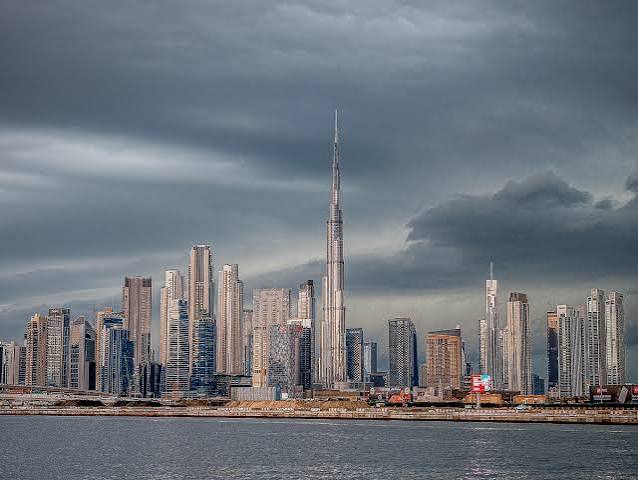
Dubai is expected to remain extremely warm and hazy over the coming days.
While the strongest rainfall chances are concentrated over eastern and southern parts of the UAE, weather conditions can change quickly during periods of convective cloud activity.
Residents should therefore continue monitoring official forecasts, particularly if planning long-distance drives or outdoor activities.
## **Humidity increases on Sunday**
By Sunday, clouds are expected to develop over eastern areas during the afternoon.
Humidity will also increase overnight across parts of the coast.
Higher overnight humidity can create uncomfortable conditions even after temperatures begin falling in the evening.
It can also increase the likelihood of **mist or fog developing during the early morning hours**.
## **Fog and mist possible by Tuesday morning**
The NCM forecast indicates that humid conditions could lead to **fog or mist over some coastal areas early on Tuesday**.
Reduced visibility can develop quickly during UAE fog events, particularly on major highways connecting Dubai, Abu Dhabi and surrounding areas.
Motorists should monitor official weather and traffic alerts before travelling early in the morning.
When visibility falls, drivers should reduce speed, maintain additional distance from other vehicles and follow any temporary speed restrictions announced by authorities.
## **Another chance of rain on Tuesday**
The unsettled weather is not expected to disappear immediately.
By Tuesday afternoon, convective clouds could once again form over eastern parts of the UAE, bringing another possibility of rainfall.
This means the country could continue seeing a combination of extreme heat, humidity, clouds, localised rain and morning fog into the early part of next week.
## **Why is it raining during such intense heat?**
Summer rainfall in the UAE is often linked to convective cloud development.
Intense daytime heating combined with moisture and atmospheric instability can cause clouds to build rapidly, particularly around mountainous and eastern areas.
These clouds can produce short but locally heavy showers, gusty winds, thunder and blowing dust even when neighbouring areas remain completely dry.
This is why one emirate—or even one neighbourhood—may experience rain while another location remains sunny and extremely hot.
## **Eastern UAE most likely to see rain**
The eastern and southern parts of the UAE are currently the areas most likely to experience convective cloud formation.
Mountainous regions around **Fujairah, Ras Al Khaimah and Al Ain**, together with surrounding inland areas, frequently see more summer cloud development than the country’s western coastal cities.
However, the exact location and intensity of convective rainfall can be difficult to predict far in advance.
Residents should rely on real-time NCM radar and alerts when storms begin developing.
## **Drivers should watch for changing conditions**
Motorists travelling between emirates should be prepared for sudden changes in visibility.
Convective clouds can generate strong winds that lift dust and sand, while heavy localised rainfall can temporarily reduce visibility and create slippery roads.
Fog presents a different risk, particularly during early morning travel.
Drivers should avoid using hazard lights while moving through fog and should follow temporary speed limits where activated.
## **Is cooler weather finally arriving?**
Not quite.
Although the UAE is moving towards the later stages of summer, temperatures around 47°C show that extreme heat remains possible.
The appearance of the **Suhail star around late August** is traditionally associated with the gradual weakening of the Gulf’s most intense summer heat, but it does not mean temperatures suddenly become comfortable.
A more noticeable improvement in outdoor conditions generally develops gradually through September and October, with significantly more comfortable weather arriving later in autumn.
## **What residents should do**
People spending time outdoors should continue treating the heat seriously.
Stay hydrated, avoid unnecessary exposure during the hottest afternoon hours and take regular breaks in air-conditioned or shaded areas.
Anyone travelling towards eastern or mountainous regions should check the latest radar before leaving because convective rainfall can develop rapidly during the afternoon.
Early-morning commuters should also watch for fog alerts as humidity increases over the coming days.
## **Why this matters**
The UAE’s weather over the next few days highlights how unpredictable late-summer conditions can become.
Temperatures may still approach **47°C inland**, but some parts of the country could simultaneously experience clouds and rainfall. Increasing humidity also raises the possibility of fog and mist during the early morning.
For residents, the key is not to assume that intense heat means completely dry weather.
Keep an eye on official NCM alerts, particularly when travelling between emirates or heading towards the mountains and eastern UAE.
## **Source Credits**
Information source and resource owners: UAE National Centre of Meteorology (NCM), Gulf News and relevant UAE authorities.
Image sources are combined from official weather authorities, credited news resources and relevant UAE media resources.
For any concerns regarding content or image credits, contact concerns@whatmatters.ae.
# **UAE Weather: Rain, Fog and 47°C Heat Expected as Unsettled Conditions Continue**
The UAE is heading into another stretch of changeable summer weather, with **temperatures reaching around 47°C, chances of afternoon rain and the possibility of fog and mist** over the coming days.
According to the National Centre of Meteorology (NCM), conditions are expected to remain fair to partly cloudy across much of the country, while convective clouds could develop over eastern and southern areas.
The unsettled pattern is expected to continue into the beginning of next week, meaning residents could experience everything from intense summer heat to localised rainfall within the same few days.
## **Friday: Rain possible over eastern and southern UAE**
Friday, August 21, is expected to be fair to partly cloudy overall.
Convective clouds could develop over parts of the **east and south during the afternoon**, creating a chance of rainfall.
These clouds can develop quickly during the summer and may be accompanied by stronger winds in affected areas.
Despite the possibility of rain, temperatures will remain high, particularly across inland parts of the country.
## **Temperatures could reach 47°C**
There is little relief from the summer heat just yet.
Maximum temperatures across inland areas could climb to around **47°C**, while coastal cities are expected to remain slightly cooler but considerably humid.
Mountain regions will generally experience lower temperatures compared with inland desert locations.
Residents should remember that humidity can make conditions feel significantly hotter, particularly near the coast.
## **Saturday could bring more afternoon rain**
Similar weather is forecast for Saturday.
Conditions should remain fair to partly cloudy, with another chance of **convective cloud formation over eastern and southern areas during the afternoon**.
These clouds could again produce localised rainfall.
Temperatures are also expected to increase gradually, maintaining very hot conditions across much of the country.
## **What about Dubai?**
Dubai is expected to remain extremely warm and hazy over the coming days.
While the strongest rainfall chances are concentrated over eastern and southern parts of the UAE, weather conditions can change quickly during periods of convective cloud activity.
Residents should therefore continue monitoring official forecasts, particularly if planning long-distance drives or outdoor activities.
## **Humidity increases on Sunday**
By Sunday, clouds are expected to develop over eastern areas during the afternoon.
Humidity will also increase overnight across parts of the coast.
Higher overnight humidity can create uncomfortable conditions even after temperatures begin falling in the evening.
It can also increase the likelihood of **mist or fog developing during the early morning hours**.
## **Fog and mist possible by Tuesday morning**
The NCM forecast indicates that humid conditions could lead to **fog or mist over some coastal areas early on Tuesday**.
Reduced visibility can develop quickly during UAE fog events, particularly on major highways connecting Dubai, Abu Dhabi and surrounding areas.
Motorists should monitor official weather and traffic alerts before travelling early in the morning.
When visibility falls, drivers should reduce speed, maintain additional distance from other vehicles and follow any temporary speed restrictions announced by authorities.
## **Another chance of rain on Tuesday**
The unsettled weather is not expected to disappear immediately.
By Tuesday afternoon, convective clouds could once again form over eastern parts of the UAE, bringing another possibility of rainfall.
This means the country could continue seeing a combination of extreme heat, humidity, clouds, localised rain and morning fog into the early part of next week.
## **Why is it raining during such intense heat?**
Summer rainfall in the UAE is often linked to convective cloud development.
Intense daytime heating combined with moisture and atmospheric instability can cause clouds to build rapidly, particularly around mountainous and eastern areas.
These clouds can produce short but locally heavy showers, gusty winds, thunder and blowing dust even when neighbouring areas remain completely dry.
This is why one emirate—or even one neighbourhood—may experience rain while another location remains sunny and extremely hot.
## **Eastern UAE most likely to see rain**
The eastern and southern parts of the UAE are currently the areas most likely to experience convective cloud formation.
Mountainous regions around **Fujairah, Ras Al Khaimah and Al Ain**, together with surrounding inland areas, frequently see more summer cloud development than the country’s western coastal cities.
However, the exact location and intensity of convective rainfall can be difficult to predict far in advance.
Residents should rely on real-time NCM radar and alerts when storms begin developing.
## **Drivers should watch for changing conditions**
Motorists travelling between emirates should be prepared for sudden changes in visibility.
Convective clouds can generate strong winds that lift dust and sand, while heavy localised rainfall can temporarily reduce visibility and create slippery roads.
Fog presents a different risk, particularly during early morning travel.
Drivers should avoid using hazard lights while moving through fog and should follow temporary speed limits where activated.
## **Is cooler weather finally arriving?**
Not quite.
Although the UAE is moving towards the later stages of summer, temperatures around 47°C show that extreme heat remains possible.
The appearance of the **Suhail star around late August** is traditionally associated with the gradual weakening of the Gulf’s most intense summer heat, but it does not mean temperatures suddenly become comfortable.
A more noticeable improvement in outdoor conditions generally develops gradually through September and October, with significantly more comfortable weather arriving later in autumn.
## **What residents should do**
People spending time outdoors should continue treating the heat seriously.
Stay hydrated, avoid unnecessary exposure during the hottest afternoon hours and take regular breaks in air-conditioned or shaded areas.
Anyone travelling towards eastern or mountainous regions should check the latest radar before leaving because convective rainfall can develop rapidly during the afternoon.
Early-morning commuters should also watch for fog alerts as humidity increases over the coming days.
## **Why this matters**
The UAE’s weather over the next few days highlights how unpredictable late-summer conditions can become.
Temperatures may still approach **47°C inland**, but some parts of the country could simultaneously experience clouds and rainfall. Increasing humidity also raises the possibility of fog and mist during the early morning.
For residents, the key is not to assume that intense heat means completely dry weather.
Keep an eye on official NCM alerts, particularly when travelling between emirates or heading towards the mountains and eastern UAE.
## **Source Credits**
Information source and resource owners: UAE National Centre of Meteorology (NCM), Gulf News and relevant UAE authorities.
Image sources are combined from official weather authorities, credited news resources and relevant UAE media resources.
For any concerns regarding content or image credits, contact concerns@whatmatters.ae.
### **Image preview options**
For the **cover image**, I’d recommend a UAE road or skyline under dramatic summer clouds rather than a generic rain photo—the story is about the unusual combination of **47°C heat + rain + fog**, not widespread rainfall across the whole country.
**Image credits:** National Centre of Meteorology / relevant original publishers or photographers shown with each source image.
# **UAE Weather: Rain, Fog and 47°C Heat Expected as Unsettled Conditions Continue**
The UAE is heading into another stretch of changeable summer weather, with **temperatures reaching around 47°C, chances of afternoon rain and the possibility of fog and mist** over the coming days.
According to the National Centre of Meteorology (NCM), conditions are expected to remain fair to partly cloudy across much of the country, while convective clouds could develop over eastern and southern areas.
The unsettled pattern is expected to continue into the beginning of next week, meaning residents could experience everything from intense summer heat to localised rainfall within the same few days.
## **Friday: Rain possible over eastern and southern UAE**
Friday, August 21, is expected to be fair to partly cloudy overall.
Convective clouds could develop over parts of the **east and south during the afternoon**, creating a chance of rainfall.
These clouds can develop quickly during the summer and may be accompanied by stronger winds in affected areas.
Despite the possibility of rain, temperatures will remain high, particularly across inland parts of the country.
## **Temperatures could reach 47°C**
There is little relief from the summer heat just yet.
Maximum temperatures across inland areas could climb to around **47°C**, while coastal cities are expected to remain slightly cooler but considerably humid.
Mountain regions will generally experience lower temperatures compared with inland desert locations.
Residents should remember that humidity can make conditions feel significantly hotter, particularly near the coast.
## **Saturday could bring more afternoon rain**
Similar weather is forecast for Saturday.
Conditions should remain fair to partly cloudy, with another chance of **convective cloud formation over eastern and southern areas during the afternoon**.
These clouds could again produce localised rainfall.
Temperatures are also expected to increase gradually, maintaining very hot conditions across much of the country.
## **What about Dubai?**
Dubai is expected to remain extremely warm and hazy over the coming days.
While the strongest rainfall chances are concentrated over eastern and southern parts of the UAE, weather conditions can change quickly during periods of convective cloud activity.
Residents should therefore continue monitoring official forecasts, particularly if planning long-distance drives or outdoor activities.
## **Humidity increases on Sunday**
By Sunday, clouds are expected to develop over eastern areas during the afternoon.
Humidity will also increase overnight across parts of the coast.
Higher overnight humidity can create uncomfortable conditions even after temperatures begin falling in the evening.
It can also increase the likelihood of **mist or fog developing during the early morning hours**.
## **Fog and mist possible by Tuesday morning**
The NCM forecast indicates that humid conditions could lead to **fog or mist over some coastal areas early on Tuesday**.
Reduced visibility can develop quickly during UAE fog events, particularly on major highways connecting Dubai, Abu Dhabi and surrounding areas.
Motorists should monitor official weather and traffic alerts before travelling early in the morning.
When visibility falls, drivers should reduce speed, maintain additional distance from other vehicles and follow any temporary speed restrictions announced by authorities.
## **Another chance of rain on Tuesday**
The unsettled weather is not expected to disappear immediately.
By Tuesday afternoon, convective clouds could once again form over eastern parts of the UAE, bringing another possibility of rainfall.
This means the country could continue seeing a combination of extreme heat, humidity, clouds, localised rain and morning fog into the early part of next week.
## **Why is it raining during such intense heat?**
Summer rainfall in the UAE is often linked to convective cloud development.
Intense daytime heating combined with moisture and atmospheric instability can cause clouds to build rapidly, particularly around mountainous and eastern areas.
These clouds can produce short but locally heavy showers, gusty winds, thunder and blowing dust even when neighbouring areas remain completely dry.
This is why one emirate—or even one neighbourhood—may experience rain while another location remains sunny and extremely hot.
## **Eastern UAE most likely to see rain**
The eastern and southern parts of the UAE are currently the areas most likely to experience convective cloud formation.
Mountainous regions around **Fujairah, Ras Al Khaimah and Al Ain**, together with surrounding inland areas, frequently see more summer cloud development than the country’s western coastal cities.
However, the exact location and intensity of convective rainfall can be difficult to predict far in advance.
Residents should rely on real-time NCM radar and alerts when storms begin developing.
## **Drivers should watch for changing conditions**
Motorists travelling between emirates should be prepared for sudden changes in visibility.
Convective clouds can generate strong winds that lift dust and sand, while heavy localised rainfall can temporarily reduce visibility and create slippery roads.
Fog presents a different risk, particularly during early morning travel.
Drivers should avoid using hazard lights while moving through fog and should follow temporary speed limits where activated.
## **Is cooler weather finally arriving?**
Not quite.
Although the UAE is moving towards the later stages of summer, temperatures around 47°C show that extreme heat remains possible.
The appearance of the **Suhail star around late August** is traditionally associated with the gradual weakening of the Gulf’s most intense summer heat, but it does not mean temperatures suddenly become comfortable.
A more noticeable improvement in outdoor conditions generally develops gradually through September and October, with significantly more comfortable weather arriving later in autumn.
## **What residents should do**
People spending time outdoors should continue treating the heat seriously.
Stay hydrated, avoid unnecessary exposure during the hottest afternoon hours and take regular breaks in air-conditioned or shaded areas.
Anyone travelling towards eastern or mountainous regions should check the latest radar before leaving because convective rainfall can develop rapidly during the afternoon.
Early-morning commuters should also watch for fog alerts as humidity increases over the coming days.
## **Why this matters**
The UAE’s weather over the next few days highlights how unpredictable late-summer conditions can become.
Temperatures may still approach **47°C inland**, but some parts of the country could simultaneously experience clouds and rainfall. Increasing humidity also raises the possibility of fog and mist during the early morning.
For residents, the key is not to assume that intense heat means completely dry weather.
Keep an eye on official NCM alerts, particularly when travelling between emirates or heading towards the mountains and eastern UAE.
## **Source Credits**
Information source and resource owners: UAE National Centre of Meteorology (NCM), Gulf News and relevant UAE authorities.
Image sources are combined from official weather authorities, credited news resources and relevant UAE media resources.
For any concerns regarding content or image credits, contact concerns@whatmatters.ae.
### **Image preview options**
For the **cover image**, I’d recommend a UAE road or skyline under dramatic summer clouds rather than a generic rain photo—the story is about the unusual combination of **47°C heat + rain + fog**, not widespread rainfall across the whole country.
**Image credits:** National Centre of Meteorology / relevant original publishers or photographers shown with each source image.