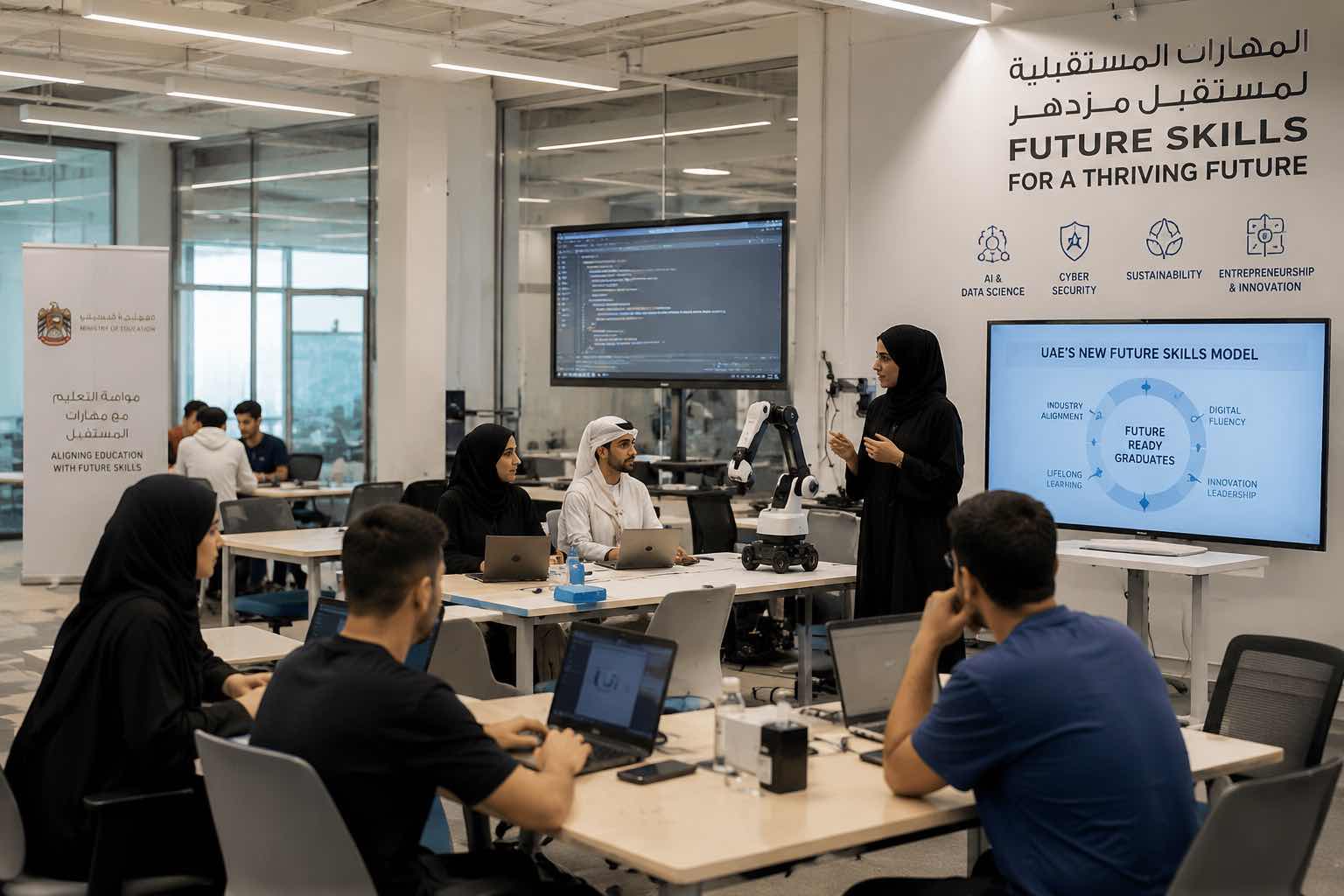
UAE’s New Future Skills Model: How Universities Are Being Aligned With Tomorrow’s Jobs
By Aryan
The shift is being led by the [Ministry of Higher Education and Scientific Research](https://www.mohesr.gov.ae/) and supported through initiatives such as the **UAE Skills Platform**, outcome-based university evaluation, AI integration in higher education and national work experience programmes.
The aim is clear: universities should not only award degrees. They should help students graduate with skills that match real jobs, emerging sectors and future industries.
## What is the new model about?
The UAE’s higher education direction is moving away from traditional input-based evaluation and towards measuring real outcomes.
This means universities are being assessed more on what students gain after studying, including employability, learning outcomes, industry partnerships, research impact and future readiness.
Gulf News reported that MoHESR’s updated Outcome-Based Evaluation Framework includes **24 key performance indicators** across six pillars: Employment Outcomes, Learning Outcomes, Industry Collaboration, Research Outcomes, Reputation and Community Engagement. The framework also introduces a **Future Readiness** assessment focused on how academic programmes align with emerging labour market skills and how institutions integrate AI into teaching and learning.
## Why the UAE wants universities to match future jobs
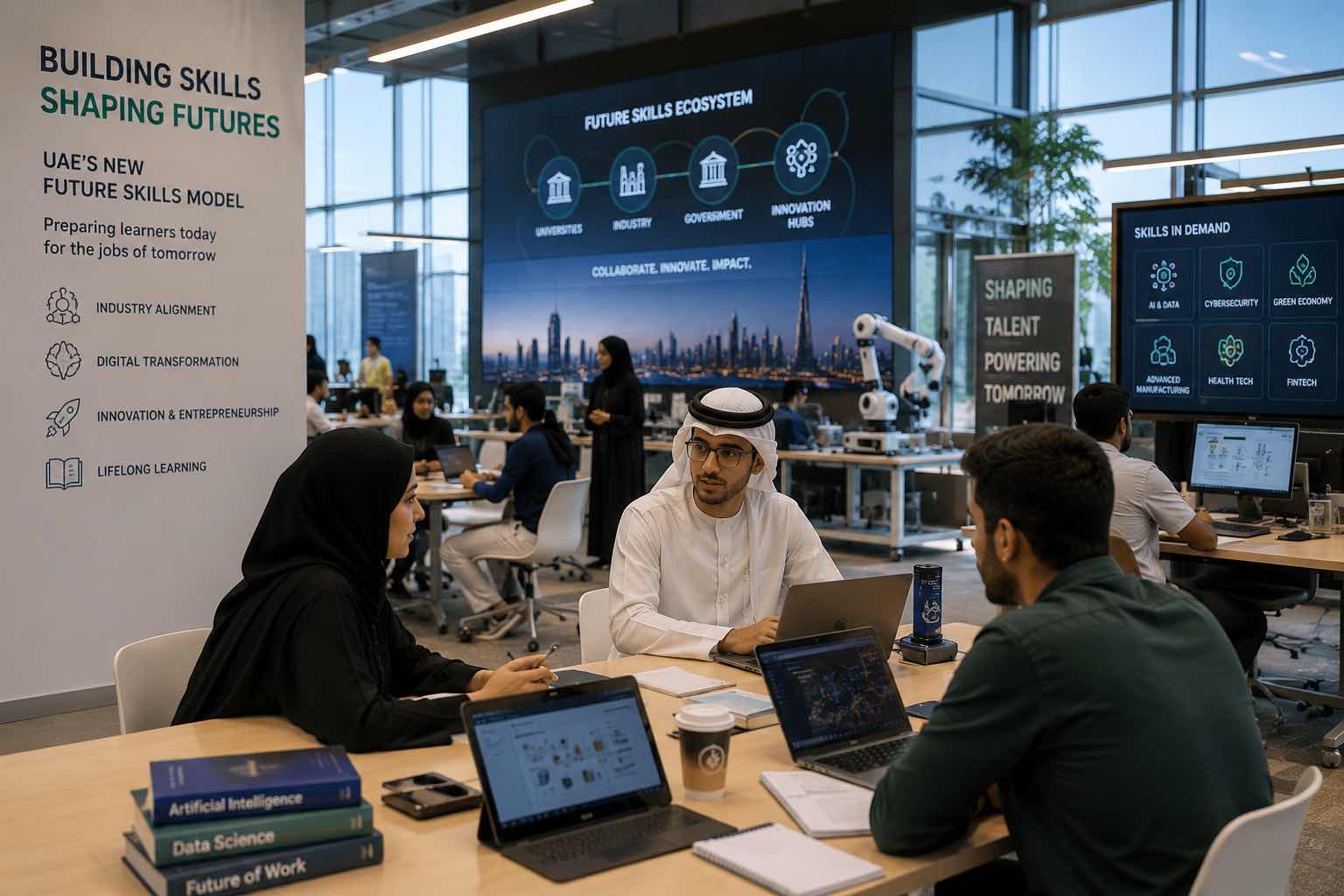
The job market is changing quickly because of artificial intelligence, digital transformation, automation, clean energy, cybersecurity, data science and new work models.
This means university graduates need more than academic knowledge. They need practical skills, digital confidence, workplace experience, problem-solving ability and adaptability.
At the Future of Work Forum 2026, the [Ministry of Human Resources and Emiratisation](https://www.mohre.gov.ae/) said the UAE views the labour market as an ecosystem that connects education, skills development, employment and long-term workforce participation. The ministry also highlighted the need to align talent with future sectors, not only current vacancies.
## UAE Skills Platform: connecting education with the labour market
One of the most important initiatives is the **UAE Skills Platform**, launched by MoHESR and MOHRE.
The platform is designed to connect academic pathways with labour market data, helping students, universities, academic advisors and government entities understand which skills are in demand.
It supports better decision-making for course selection, future specialisations and career planning. Instead of choosing a degree without knowing where the job market is heading, students can use skills data to make more informed choices.
The platform is part of the UAE’s wider effort to connect education outcomes with real workforce needs.
## AI integration in higher education

Artificial intelligence is also becoming a major part of the UAE’s higher education transformation.
MoHESR hosted an interactive workshop on AI in Higher Education with more than **120 experts** from UAE-based higher education institutions, government entities, private institutions and the Advisory Committee for Higher Education and Future Skills. The ministry said the initiative aims to guide universities and economic sector partners in adopting advanced AI models in higher education and scientific research.
This means AI is not only being treated as a subject students learn. It is also becoming part of how universities teach, conduct research, assess performance and prepare students for future work.
## Work experience is becoming more important
The UAE is also pushing universities to connect academic learning with real workplace exposure.
MoHESR announced that **48 higher education institutions** had joined the National Work Experience Platform for higher education students. The platform connects academic learning with work experience and helps improve student readiness for the labour market. Within three months of launch, **37 public and private sector training providers** had joined, offering **545 work experience opportunities** across sectors including finance, insurance, ICT, administrative services, education and real estate.
This is important because many employers want graduates who already understand workplace expectations, not only classroom theory.
## What skills will matter most?
The UAE’s future-focused higher education model is expected to prioritise skills linked to national growth sectors.
These may include:
- Artificial intelligence - Data analytics - Cybersecurity - Renewable energy - Advanced technology - Engineering - Finance and insurance - Digital business - Healthcare innovation - Research and development - Communication and problem-solving - Entrepreneurship - Adaptability and lifelong learning
As technology changes job roles, universities will need to update programmes more quickly and work more closely with employers.
## What this means for students
For students, the shift could make university education more useful and career-focused.
Instead of choosing a course only based on reputation or popularity, students may be encouraged to think about which skills are linked to future jobs and national priority sectors.
The new model could also mean more internships, industry projects, applied learning, AI-supported education and career guidance.
Students may graduate with stronger practical experience and a clearer understanding of where their degree can lead.
## What this means for universities
For universities, the message is that performance will increasingly be judged by outcomes.
Institutions will need to show that their programmes produce skilled graduates, support employment, collaborate with industry and stay relevant to the future economy.
This may encourage universities to redesign curricula, create stronger employer partnerships, expand work experience pathways and invest in data-driven academic planning.
## What this means for employers
For employers, better alignment between universities and the labour market could create a stronger graduate talent pipeline.
Companies may get more opportunities to collaborate with universities, offer training placements, contribute to curriculum design and identify students earlier.
This can help reduce the gap between what graduates study and what businesses actually need.
## Why this matters
The UAE’s higher education shift is important because the future job market will reward skills, adaptability and real-world readiness.
By linking universities with future jobs, AI, labour market data and work experience, the UAE is trying to build a stronger bridge between education and employment.
For students, this could mean better career clarity. For universities, it means greater accountability. For employers, it means stronger access to skilled talent.
As the economy becomes more technology-driven, the countries that connect education with future skills will be better prepared for the jobs of tomorrow.
## Source Credits
Information source/resource owners: Ministry of Higher Education and Scientific Research, Ministry of Human Resources and Emiratisation, UAE Government Portal, Gulf News, Fast Company Middle East, Emirates News Agency.
## Image Credits
Image credit/resource owners: Ministry of Higher Education and Scientific Research, Gulf News, Khalifa University, Hamdan Bin Mohammed Smart University.