Up to 100 Meteors an Hour in the UAE: Why the Perseids 2026 Meteor Shower Is Unlike Any Other
By Thasmiya
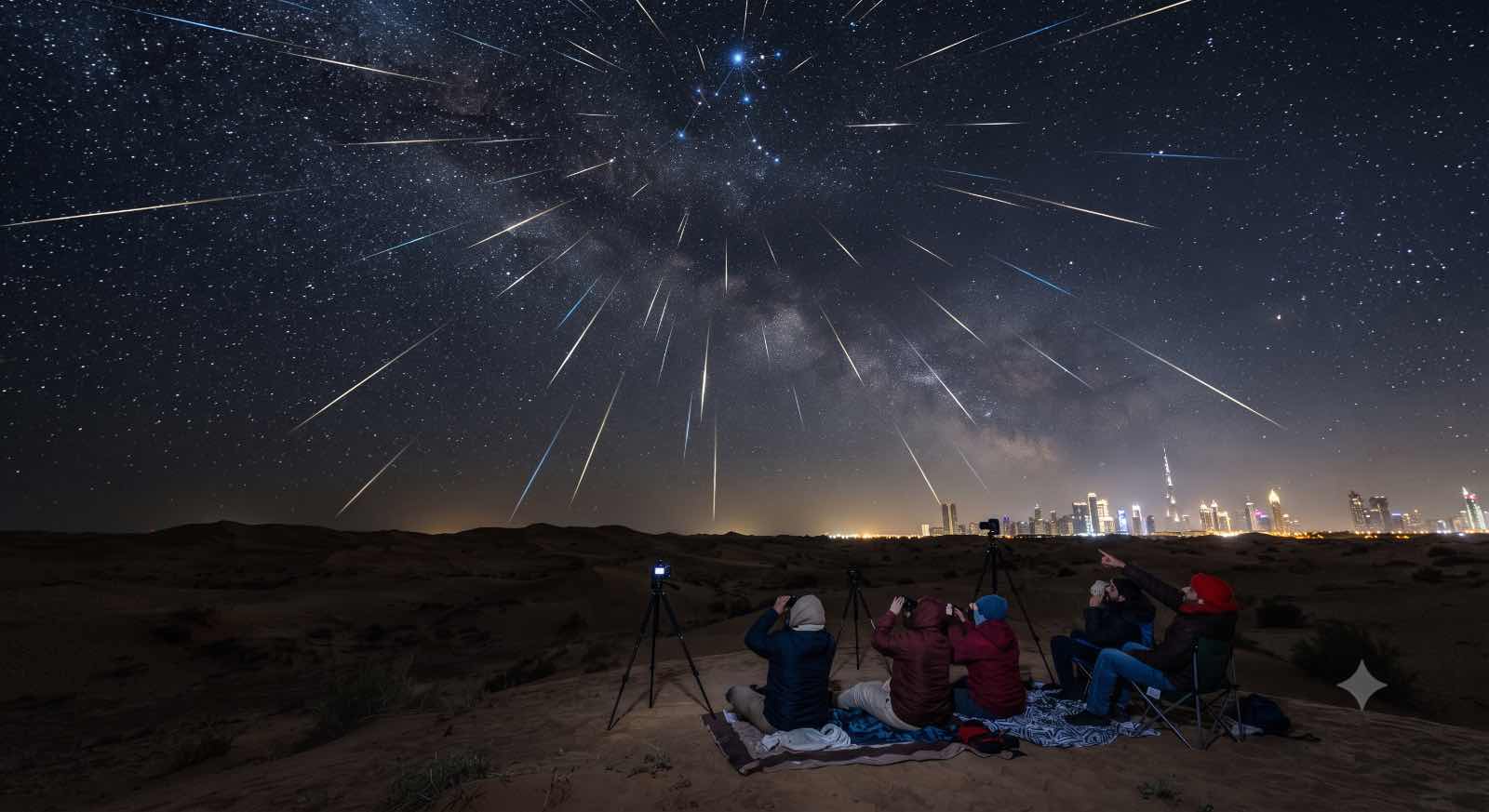
Skywatchers across the UAE are in for one of the most spectacular astronomical events of the year as the **Perseids meteor shower** returns this August, with peak activity expected to produce **up to 100 meteors per hour** under ideal conditions.
Known for its bright, fast-moving “shooting stars” and occasional fireballs, the Perseids is widely regarded as one of the best meteor showers visible from Earth. This year’s display is expected to be even more impressive thanks to favourable moon conditions that will leave skies darker during the peak.
## **What is the Perseids meteor shower?**
The Perseids is an annual meteor shower that occurs when Earth passes through a trail of debris left behind by **Comet 109P/Swift-Tuttle**.
As tiny particles enter Earth’s atmosphere at speeds of around **59 kilometres per second**, they burn up due to friction, creating the bright streaks of light commonly known as shooting stars.
Although the meteors appear to originate from the constellation Perseus, they can be seen across large parts of the sky.
## **When is the Perseids 2026 peak?**
The Perseids are active from **mid-July until late August**, with the strongest activity expected during the nights of **August 12 and 13, 2026**.
Astronomers expect the best viewing after midnight, with activity increasing through the early morning hours before dawn.
During the peak, observers under dark skies could see **up to 100 meteors every hour**.
## **Why is 2026 special?**
Unlike some previous years, **moonlight is expected to interfere very little with the peak** of the 2026 Perseids.
A darker sky makes faint meteors much easier to spot, allowing observers to see significantly more shooting stars than during years with a bright full moon.
The Perseids are also known for producing:
- Bright fireballs - Long meteor trails - Fast-moving shooting stars - Frequent meteor activity throughout the night
This combination makes 2026 one of the most favourable years for viewing the shower.
## **Can you see the Perseids from the UAE?**
Yes.
The Perseids are visible from the UAE and can be observed across the country, provided skies remain clear and light pollution is kept to a minimum.
Residents in Dubai, Abu Dhabi and Sharjah may still see meteors, but darker locations generally offer much better viewing conditions.
## **Best places in the UAE to watch**
Some of the best locations include:
- Al Qudra Desert - Al Marmoom Desert Conservation Reserve - Jebel Jais - Hatta - Liwa Desert - Al Ain Desert areas - Fujairah mountain regions
These locations offer darker skies away from city lights, making it easier to spot faint meteors.
## **What time should you watch?**
Astronomers recommend watching:
- From around **midnight onwards** - Between **2am and 4:30am** for the highest activity - Before morning twilight begins
The longer you stay outside, the more meteors you’re likely to see.
## **Do you need a telescope?**
No.
The Perseids are best viewed **without binoculars or telescopes**.
Instead:
- Find a dark location - Allow your eyes around 20–30 minutes to adjust - Lie back in a comfortable chair or blanket - Look broadly across the sky rather than at one specific point
Because meteors can appear anywhere, a wide field of view is far more effective than using magnifying equipment.
## **Why are the Perseids so popular?**
The Perseids are considered one of the world’s best meteor showers because they combine:
- High meteor rates - Bright meteors - Warm summer nights in the Northern Hemisphere - Reliable annual activity - Occasional spectacular fireballs
For many amateur astronomers, it is the highlight of the year’s meteor calendar.
## **Can you photograph the meteor shower?**
Yes.
Photographers can improve their chances by:
- Using a tripod - Selecting a wide-angle lens - Choosing a long exposure - Using manual focus - Finding a location with minimal light pollution
Patience is important, as capturing a meteor often requires taking many consecutive images.
## **Weather in the UAE**
The UAE’s generally dry summer weather often provides good astronomical viewing, although humidity, dust or clouds can occasionally reduce visibility.
Checking the latest weather forecast before travelling to a viewing location is recommended.
## **Tips for the best experience**
To enjoy the meteor shower:
- Choose a dark location away from city lights - Arrive before midnight - Bring water and light snacks - Wear comfortable clothing - Carry a mat or reclining chair - Avoid looking at your phone frequently, as bright screens reduce night vision - Give your eyes at least 20 minutes to adapt to the darkness
## **Are meteors dangerous?**
No.
The meteors visible during the Perseids are extremely small—often no larger than grains of sand.
They burn up high in Earth’s atmosphere, typically at altitudes of around 80–100 kilometres, and do not pose a danger to people on the ground.
## **Why this matters**
The Perseids provide one of the easiest opportunities for people in the UAE to enjoy a major astronomical event without specialised equipment.
With darker skies expected during the 2026 peak, observers could witness up to 100 meteors an hour, making it one of the best years in recent memory to experience the annual shower.
For families, photographers and astronomy enthusiasts, it’s a chance to spend a summer night outdoors watching one of nature’s most spectacular displays.
## **FAQs**
### **When is the Perseids meteor shower in 2026?**
The shower is active from mid-July to late August, with peak activity expected on the nights of **August 12 and 13, 2026**.
### **How many meteors can be seen?**
Under ideal dark-sky conditions, observers may see **up to 100 meteors per hour** during the peak.
### **Can I see the Perseids from Dubai?**
Yes. The shower is visible from Dubai, although darker locations outside the city generally provide a much better viewing experience.
### **Do I need a telescope?**
No. The Perseids are best viewed with the naked eye because meteors can appear across large areas of the sky.
### **What causes the Perseids?**
The shower occurs when Earth passes through dust and debris left behind by **Comet 109P/Swift-Tuttle**.
### **What is the best time to watch?**
The highest activity is usually between **midnight and dawn**, particularly between **2am and 4:30am**.
### **Where are the best viewing spots in the UAE?**
Dark locations such as **Al Qudra**, **Al Marmoom**, **Jebel Jais**, **Hatta**, **Liwa Desert** and other areas away from city lights are among the best places to watch.
## **Source Credits**
Information source and resource owners: NASA, International Meteor Organization (IMO), American Meteor Society (AMS), UAE astronomy organisations.
## **Image Credits**
Image sources are combined from AI-generated visuals and other platforms. If any owner wants to be mentioned or any content needs to be changed, please email us at **concerns@whatmatters.ae**.