Will UAE Fuel Prices Increase or Decrease in July 2026? What Drivers Can Expect

By Mohammed
UAE motorists are waiting for the July 2026 petrol and diesel prices, with many hoping for relief after several months of higher petrol costs.
The official July fuel prices have not yet been announced at the time of writing. The UAE Fuel Price Committee usually releases the new monthly petrol and diesel rates at the end of the previous month, with the prices taking effect from the first day of the new month.
Based on current market expectations and recent reports, UAE petrol prices are expected to decrease in July 2026 after four months of increases. However, the final rates will only be confirmed once the UAE Fuel Price Committee makes the official announcement.
## Why UAE drivers are watching July fuel prices closely
Fuel costs have become a major concern for drivers across Dubai, Abu Dhabi, Sharjah and the rest of the UAE.
In June 2026, petrol prices increased sharply compared with May. Super 98 rose to **AED 3.95 per litre**, Special 95 increased to **AED 3.83 per litre**, and E-Plus 91 moved to **AED 3.76 per litre**. Diesel was priced at **AED 4.33 per litre**.
This made June one of the costlier months for petrol in recent years, especially for residents with long daily commutes, family cars, delivery vehicles and business fleets.
## Will petrol prices fall in July 2026?
Petrol prices are expected to fall in July 2026, but the final figures are not official yet.
Recent market commentary suggests motorists could see a decrease after four consecutive months of petrol price hikes. The expectation is linked to changes in international oil prices and fuel market trends during June.
However, UAE petrol and diesel prices are not confirmed until the monthly announcement is made by the UAE Fuel Price Committee.
Drivers should therefore treat any expected decrease as a forecast, not a confirmed price.
## Why fuel prices change every month in the UAE
UAE fuel prices are linked to global market prices.
The country deregulated fuel prices in 2015 and moved to a monthly pricing system. A fuel price committee reviews international fuel price levels before setting the UAE’s monthly petrol and diesel rates.
This means local pump prices can rise or fall depending on global oil prices, refining costs, distribution costs and market conditions.
For motorists, this monthly system means fuel costs can change at the start of every month.
## What were the UAE fuel prices in June 2026?
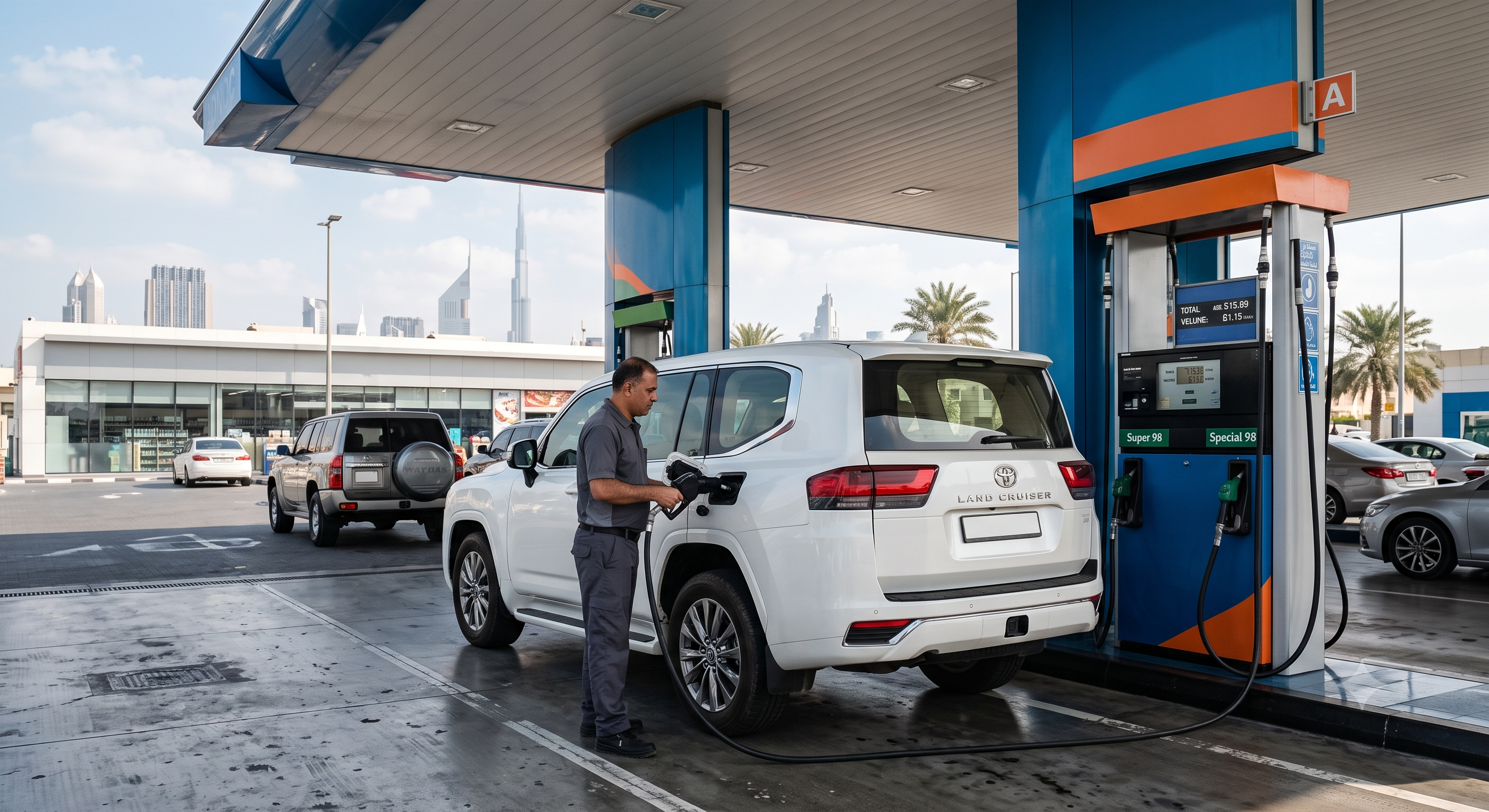
For June 2026, UAE fuel prices were:
Super 98 petrol: **AED 3.95 per litre**.
Special 95 petrol: **AED 3.83 per litre**.
E-Plus 91 petrol: **AED 3.76 per litre**.
Diesel: **AED 4.33 per litre**.
Compared with May, petrol prices increased by up to **AED 0.29 per litre**, while diesel prices dropped compared with the previous month.
## How much could drivers save if prices fall?
The exact saving will depend on the final July prices and the size of the vehicle’s fuel tank.
For example, even a small drop of **10 fils per litre** can reduce the cost of a 50-litre full tank by **AED 5**.
A larger drop of **20 fils per litre** can reduce the cost of the same 50-litre refill by **AED 10**.
For drivers who refill several times a month, the monthly saving can become more noticeable. For delivery riders, taxis, transport companies and business fleets, even small changes can affect operating costs.
## When will July 2026 fuel prices be announced?
The UAE Fuel Price Committee usually announces monthly fuel prices at the end of the previous month.
This means July 2026 fuel prices are expected to be confirmed around the end of June 2026, with the new rates applying from **July 1, 2026**.
Until then, motorists should rely on the current official June prices and avoid treating unofficial forecasts as confirmed rates.
## What affects whether prices go up or down?
Several factors can influence UAE fuel prices.
The most important factor is global oil prices. If international oil prices decline during the pricing review period, local fuel prices may also decrease.
Geopolitical tensions, oil supply disruptions, OPEC-related production decisions, shipping risks, refining margins and global demand can also affect pricing.
Currency movements matter too, because international oil is usually priced in US dollars. Since the UAE dirham is pegged to the dollar, global oil price movement is usually the more important factor for local fuel trends.
## What should UAE drivers do now?
Drivers should wait for the official announcement before planning monthly fuel costs.
If prices are expected to fall and a driver does not urgently need a full tank, they may choose to refill only what they need until the new prices are announced.
However, motorists should not risk running low on fuel just to save a small amount. Safety and convenience should come first.
Drivers with long commutes should also continue using fuel-saving habits such as smooth acceleration, correct tyre pressure, regular servicing and avoiding unnecessary idling.
## How to check official UAE fuel prices
Motorists can check monthly fuel prices through official government and fuel company channels.
These include official announcements from the UAE Fuel Price Committee, petrol station operators such as ADNOC Distribution, ENOC and Emarat, and trusted UAE news outlets.
Fuel prices apply across the UAE, so the same monthly rates are used in Dubai, Abu Dhabi, Sharjah, Ajman, Umm Al Quwain, Ras Al Khaimah and Fujairah.
## Why this matters
A possible July fuel price decrease would be welcome news for UAE residents after the sharp petrol increase in June.
Fuel prices affect daily commutes, school runs, delivery costs, taxi fares, logistics and household budgets. Even a small change at the pump can make a difference for people who drive frequently.
For now, the key message is simple: July 2026 petrol prices are expected to fall, but the final rates are not official until the UAE Fuel Price Committee announces them.
## Source Credits
Information source/resource owners: UAE Government Portal, UAE Cabinet, UAE Fuel Price Committee, Khaleej Times, Gulf News, IPT UAE, Reuters.
## Image Credits
Image credit/resource owners: ADNOC Distribution, ENOC, Emarat, Gulf News, Khaleej Times, Getty Images.